فئات
بلوق جديد
كيف يمكنك حماية مروحة تبريد الهواء الخارجية من تدهور مانع التسرب المقاوم للماء بمعيار IP68؟
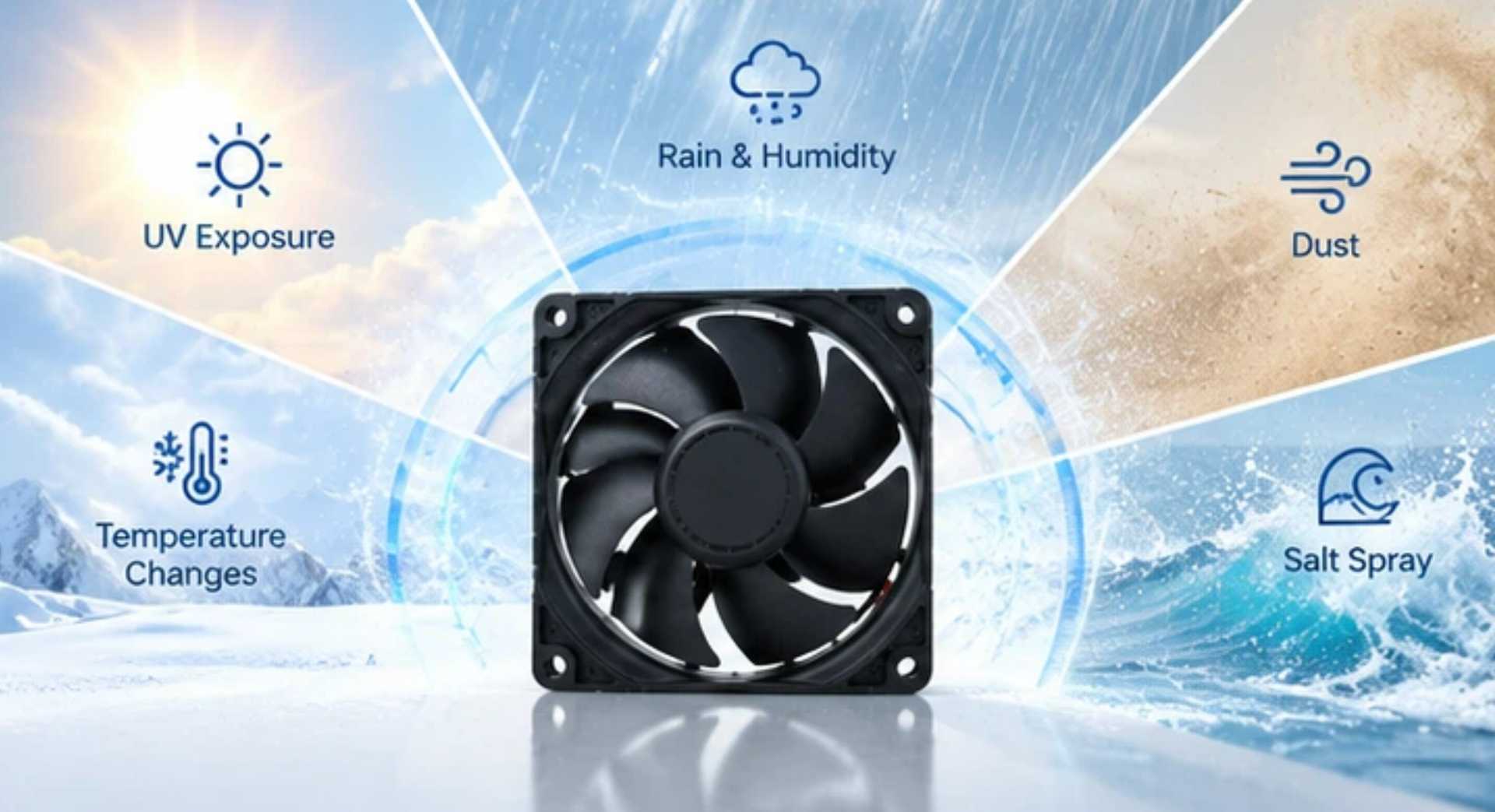
September 07 , 2026تُستخدم مراوح تبريد الهواء الخارجي بشكل متزايد في المعدات التي يجب أن تعمل باستمرار في ظل ظروف بيئية قاسية كالأمطار والرطوبة والغبار وتغيرات درجات الحرارة ورذاذ الملح وغيرها. وتعتمد العديد من الأنظمة، مثل خزائن الاتصالات، ووحدات تزويد الطاقة الخارجية، ومعدات شحن المركبات الكهربائية، ومحولات الطاقة الشمسية، وخزائن التحكم الصناعية، وأنظمة التبريد، والمعدات الزراعية، وشاشات LED، على تدفق الهواء القسري لإزالة الحرارة. ولكن عند تركيب هذه الأنظمة في الهواء الطلق، لا يُعد أداء التبريد سوى جزء واحد من معادلة الموثوقية، إذ تُعد قدرة المروحة على الحفاظ على حمايتها من الماء والغبار لسنوات عديدة بنفس القدر من الأهمية.
أنمروحة بتصنيف IP68صُمم هذا المنتج لتوفير مستوى عالٍ جدًا من الحماية ضد دخول الغبار والماء. مع ذلك، لا ينبغي اعتبار تصنيف IP68 ضمانًا لبقاء نظام منع التسرب دون تغيير إلى الأبد. فالتعرض للعوامل الخارجية يُعرّض المنتج باستمرار لضغوط ميكانيكية وحرارية وكيميائية وبيئية. بمرور الوقت، قد تفقد موانع التسرب مرونتها، وقد تتلف المواد اللاصقة، وقد تصبح نقاط دخول الكابلات عرضة للتلف، وقد تشهد وصلات الهيكل تغيرات في الأبعاد، وقد يتسبب التكثيف في تكوّن الرطوبة حتى في حال عدم دخول مياه الأمطار مباشرةً إلى الجهاز.
وهذا يعني أن حماية مروحة تبريد الهواء الخارجية من تدهور مانع التسرب المقاوم للماء IP68 يتطلب استراتيجية موثوقية كاملة بدلاً من مجرد اختيار مروحة تحمل علامة IP68.
بالنسبة لمصنعي المعدات والمهندسين، فإن السؤال الأكثر أهمية ليس فقط ما إذا كان بإمكان المروحة اجتياز اختبار IP68 عندما تكون جديدة، ولكن ما إذا كان هيكل منع التسرب الخاص بالمروحة، والمواد، والمكونات الكهربائية، والمحامل، وتوصيلات الكابلات، وبيئة التركيب يمكن أن تستمر في العمل بشكل موثوق طوال فترة الخدمة المتوقعة.
ماذا يعني تصنيف IP68 حقاً بالنسبة لمروحة تبريد خارجية؟
يُستخدم رمز IP لوصف مستوى الحماية الذي يوفره الغلاف ضد الأجسام الصلبة والماء. يشير الرقم الأول إلى الحماية من الجسيمات الصلبة، بينما يشير الرقم الثاني إلى الحماية من الماء. يُمثل IP68 مستوى عالٍ من الحماية من الغبار بالإضافة إلى الحماية من الغمر في الماء في ظل ظروف اختبار محددة. قد تختلف ظروف الغمر الدقيقة المرتبطة بتصنيف IP68 باختلاف ظروف الاختبار التي يُعلن عنها المُصنِّع والمتطلبات المعمول بها.
هذا التمييز مهم لاختيار المراوح الخارجية.
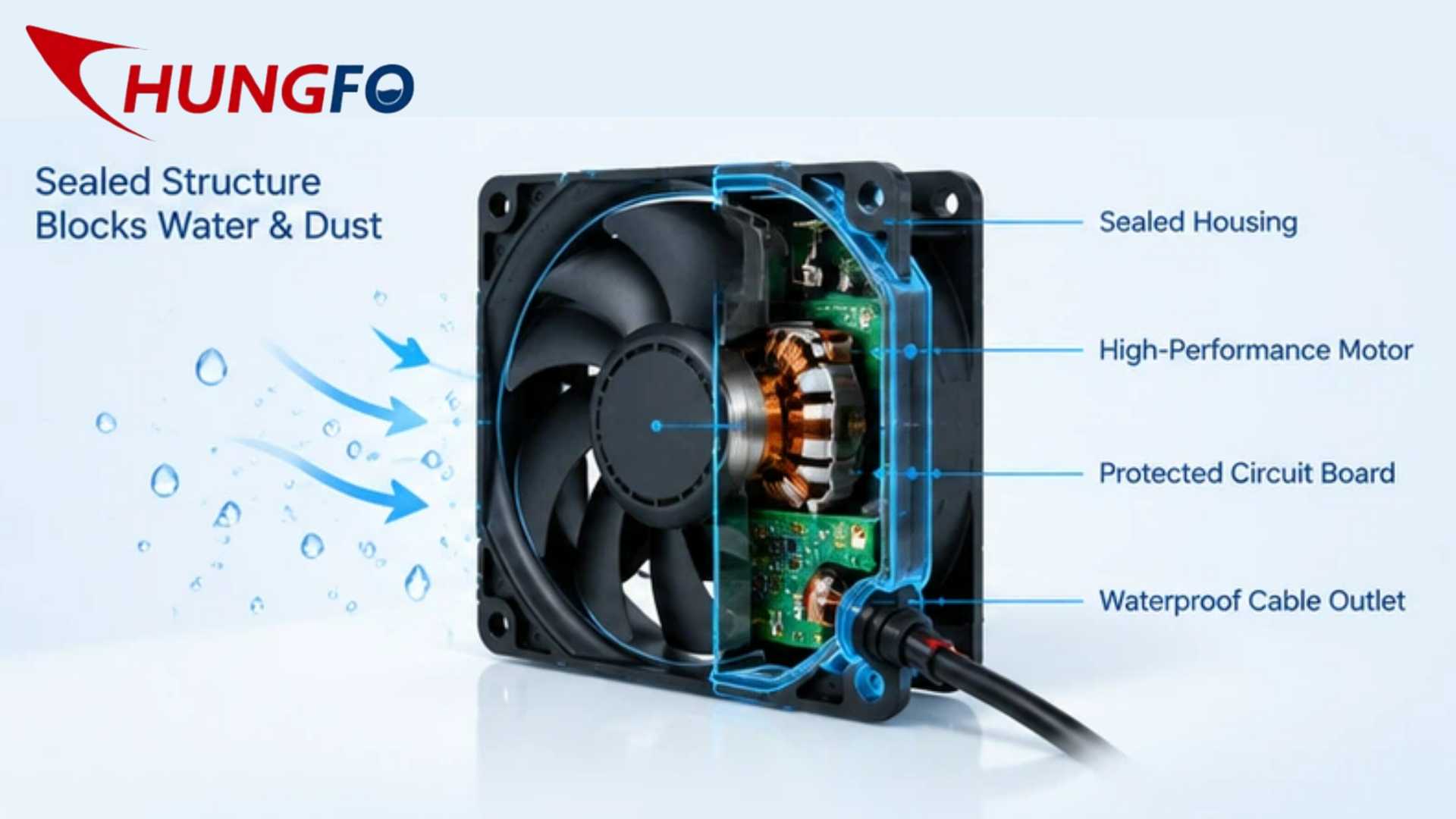
مروحة IP68 ليست مجرد مروحة عادية مغطاة بغطاء مطاطي. لتحقيق حماية موثوقة، يحتاج المصنّعون عادةً إلى التحكم في عدة مسارات محتملة لدخول الماء. قد تشمل هذه المسارات وصلات الهيكل، ومنافذ الكابلات، والموصلات، وهياكل المحركات، ولوحات الدوائر، ومناطق التحميل، وغيرها من نقاط التوصيل.
يمكن للمروحة المقاومة للماء المصممة جيدًا أن تستخدم مزيجًا من الهياكل المغلقة، والحماية بالراتنج، والطلاءات المطابقة، ومنافذ الكابلات المقاومة للماء، والمحامل المتخصصة، والمواد المقاومة للتآكل، وعمليات التصنيع الخاضعة لرقابة دقيقة. وتُظهر الأمثلة الصناعية أنه يمكن استخدام التغليف أو التغليف الحراري لعزل الملفات ولوحات الدوائر عن البيئة الخارجية.
مع ذلك، فإن مستوى الحماية المُقاس أثناء اختبارات الإنتاج يُمثل حالةً مُحددة في وقتٍ مُحدد. تتعرض المعدات الخارجية لدورات حرارية مُتكررة، واهتزازات، وتعرض للأشعة فوق البنفسجية، وتلوث كيميائي، وإجهاد ميكانيكي. هذه العوامل يُمكن أن تُغير خصائص مواد منع التسرب تدريجيًا.
ولهذا السبب ينبغي اعتبار الحماية طويلة الأجل مشكلة هندسية على مستوى النظام.
لماذا تتدهور موانع التسرب المقاومة للماء بمعيار IP68 بمرور الوقت؟
أكثر الأخطاء شيوعاً في تصميم أنظمة التبريد الخارجية هو الاعتقاد بأن خاصية مقاومة الماء خاصية دائمة للمنتج. في الواقع، يتأثر كل نظام عزل بالبيئة المحيطة به.
يُعدّ التغير في درجة الحرارة أحد أهم العوامل.
قد تتعرض المروحة الخارجية لليالي الباردة، وأشعة الشمس المباشرة خلال النهار، وأسطح ساخنة، وأمطار مفاجئة، وتغيرات موسمية في درجات الحرارة. ولا تتمدد وتنكمش المواد البلاستيكية، والأختام المطاطية، والمواد اللاصقة، والمكونات المعدنية، والمواد الراتنجية بالضرورة بنفس المعدل.
يمكن أن يؤدي التمدد والانكماش المتكرر إلى إجهاد الأسطح البينية.
إذا أصبح مانع التسرب أكثر صلابة أو ليونة أو انضغط أو انتفخ أو تشوه بشكل دائم، فقد ينخفض ضغط التلامس تدريجيًا. قد لا يتسبب تغيير طفيف في حدوث تسرب مرئي على الفور، ولكنه قد يخلق مسارًا للرطوبة عند تعرضه المتكرر للعوامل البيئية.
يُعدّ التغير الحراري الدوري مهمًا أيضًا لأنّ الحاويات الإلكترونية الخارجية قد تشهد تغيرات في الضغط. فعندما يسخن الهواء الداخلي ويتمدد، ثم يبرد وينكمش، قد تتعرض الحاوية لتقلبات في الضغط. وعلى المدى الطويل، قد تُشكّل هذه الدورات تحديًا لأسطح منع التسرب الضعيفة. وقد حددت الأبحاث الهندسية المتعلقة بالحاويات الخارجية المغلقة التمدد والانكماش الحراري كعوامل محتملة تُسهم في فشل منع التسرب ومشاكل التكثيف.
يُعد التعرض للأشعة فوق البنفسجية مصدر قلق آخر.
قد تتعرض المراوح المثبتة في الهواء الطلق لأشعة الشمس لآلاف الساعات. وبحسب نوع المادة، قد تُساهم الأشعة فوق البنفسجية في تغير لونها، أو هشاشتها، أو تشقق سطحها، أو فقدان خصائصها الميكانيكية. لذا، يُعد اختيار مواد مناسبة للتعرض الخارجي أمرًا بالغ الأهمية عندما يكون غلاف المروحة أو هيكلها العازل مُعرضًا لأشعة الشمس المباشرة.
تُشكل الرطوبة تحدياً آخر طويل الأمد.
لا يشترط بالضرورة أن تتسبب البيئة الرطبة في مشاكل تتعلق بالموثوقية نتيجة التلامس المباشر مع الماء. إذ يمكن للرطوبة أن تتسرب عبر نقاط التلامس الحساسة، والموصلات، وهياكل الكابلات، أو حتى العيوب المجهرية. كما يمكن للرطوبة العالية أن تسرّع من تآكل المكونات المعدنية والوصلات الإلكترونية.
يمكن أن يكون رذاذ الملح شديد العدوانية.
قد تتعرض المعدات الخارجية المثبتة بالقرب من المناطق الساحلية لجزيئات الملح والرطوبة المحمولة جواً. ويمكن أن يؤدي التلوث بالملح إلى تسريع تآكل الأجزاء المعدنية والموصلات والمثبتات والوصلات الكهربائية. ولذلك، غالباً ما توفر الشركات المصنعة للمراوح البيئية تصاميم خاصة مقاومة للتآكل للتطبيقات التي تتعرض لرذاذ الملح والرطوبة.
قد يؤدي الغبار إلى تفاقم المشكلة.
قد تتراكم جزيئات الغبار حول موانع التسرب والأسطح الميكانيكية. وإذا احتوى الغبار على جزيئات كاشطة أو نشطة كيميائيًا، فإن الحركة أو الاهتزاز المتكرر قد يؤثر تدريجيًا على سطح مانع التسرب. وعندما يختلط الغبار بالرطوبة، فإنه يُشكّل رواسب يصعب إزالتها.
كيف يمكن لغطاء المروحة حماية مانع التسرب المقاوم للماء؟
يُعد غطاء المروحة خط الدفاع الرئيسي الأول ضد التلوث البيئي.
يجب أن يتميز المروحة الخارجية المتينة بهيكل يقلل من الفتحات غير الضرورية ويخلق أسطح إحكام محكمة. وكلما قلّت الفتحات غير المحكمة، كلما سهُل الحفاظ على حماية بيئية موثوقة.
ينبغي تصميم وصلات التثبيت بعناية.
قد لا توفر الوصلة الميكانيكية البسيطة حماية كافية على المدى الطويل ما لم يتم التحكم بشكل صحيح في أسطح التلامس، وضغط الحشية، والتفاوتات، وطريقة التثبيت. وبحسب التصميم، قد يستخدم المصنّعون الحشيات، أو مركبات منع التسرب، أو حشو الراتنج، أو التغليف، أو التشكيل بالحقن، أو غيرها من التقنيات.
لا يقتصر الهدف على جعل فتح الغلاف صعباً فحسب، بل يهدف إلى إنشاء حاجز ثابت ضد الماء مع الحفاظ على السلامة الميكانيكية أثناء الاهتزازات والتغيرات الحرارية.
بالنسبة للتطبيقات التي تتطلب حماية بيئية عالية للغاية، يمكن أيضًا حماية المكونات الإلكترونية الداخلية عن طريق الطلاء أو التغليف. تستخدم بعض تصميمات المراوح المصنفة بمعيار IP68 تقنيات تعتمد على الراتنج لعزل الملفات الحساسة ولوحات الدوائر عن الماء والرطوبة.
يوفر هذا النهج طبقة إضافية من الحماية.
إذا تعرض الغلاف الخارجي لعيب صغير، فإن التغليف الداخلي يمكن أن يقلل من احتمالية وصول الرطوبة إلى المكونات الكهربائية الحساسة.
لماذا يُعد مخرج الكابل نقطة عزل مائي بالغة الأهمية؟
يولي العديد من المهندسين اهتماماً كبيراً لغلاف المروحة، لكنهم يقللون من شأن مخرج الكابل.
يجب أن يمر الكابل من المنطقة الداخلية المحمية إلى البيئة الخارجية. هذا الانتقال يخلق واجهة لا مفر منها.
إذا كان مخرج الكابل مصممًا بشكل سيئ، فقد يتسرب الماء على طول الكابل أو من خلال الفجوات المحيطة بنقطة دخول الكابل.
لهذا السبب، غالباً ما تستخدم تصميمات المراوح المقاومة للماء مخارج كابلات مصبوبة، ومركبات مانعة للتسرب، وغدد كابلات، وموصلات مقاومة للماء، أو طرق إحكام أخرى يتم التحكم فيها.
مادة الكابل نفسها مهمة أيضاً.
يجب أن تتحمل الكابلات الخارجية تغيرات درجات الحرارة، والتعرض للأشعة فوق البنفسجية، والرطوبة، والانحناء، والاهتزاز، وأحيانًا المواد الكيميائية. قد لا يوفر الكابل الذي يعمل بكفاءة في الأماكن المغلقة نفس الموثوقية على المدى الطويل في الأماكن المفتوحة.
لذلك ينبغي تقييم الاتصال بين الكابل والمروحة كجزء من نظام العزل المائي الكامل.
قد يؤدي استخدام مروحة عالية الجودة بتصنيف IP68 مع موصل خارجي غير محمي إلى خلق نقطة ضعف في النظام ككل. قد تتمتع المروحة بحماية بيئية ممتازة، لكن قد لا يتمتع تجميع المعدات النهائي بهذه الحماية.
كيف يؤثر التكثيف على موثوقية مروحة IP68؟
العزل المائي والتكثيف مشكلتان مختلفتان.
يحدث تسرب الماء المباشر عندما يدخل الماء السائل عبر فتحة أو مانع تسرب تالف. أما التكثيف فيحدث عندما تتحول الرطوبة الموجودة في الهواء إلى ماء سائل نتيجة لتغيرات درجة الحرارة.
يُعد هذا التمييز مهماً بشكل خاص في المعدات الإلكترونية الخارجية.
قد يحتوي الغلاف المغلق على هواء رطب. أثناء التشغيل نهارًا، تقوم المكونات الداخلية بتسخين الهواء. وفي الليل، يبرد الجهاز. إذا وصلت درجة الحرارة الداخلية إلى نقطة الندى، فقد يتكثف الماء على الأسطح الباردة.
لذلك، حتى الغلاف المحكم الإغلاق يمكن أن يتعرض للرطوبة الداخلية إذا لم يتم التحكم في التصميم الحراري بشكل صحيح.
لذا ينبغي أن تراعي أنظمة المراوح الخارجية كلاً من الحماية من تسرب المياه وإدارة الرطوبة.
في بعض تصميمات الحاويات، يمكن استخدام أغشية تسمح بمرور الهواء للمساعدة في معادلة الضغط مع الحد من تسرب الماء السائل. يجب اختيار هذه الحلول بعناية لأن أي مكون تهوية إضافي قد يؤثر على الحماية البيئية الشاملة للحاوية. عادةً ما تؤكد الإرشادات الهندسية لحاويات IP67 وIP68 على معادلة الضغط وإدارة التكثيف كجزء من ضمان الموثوقية على المدى الطويل.
كيف تؤثر تغيرات درجة الحرارة على موانع التسرب في المراوح؟
غالباً ما يكون التذبذب في درجات الحرارة أكثر ضرراً بمرور الوقت من حدث واحد لارتفاع درجة الحرارة.
تخيل مروحة تبريد خارجية تعمل داخل خزانة كهربائية. خلال النهار، ترفع أشعة الشمس درجة حرارة الخزانة. تعمل المروحة بسرعة عالية لأن المكونات الإلكترونية الداخلية تولد حرارة. في الليل، يبرد النظام بسرعة.
قد تتكرر هذه الدورة كل يوم.
يتمدد الغلاف وينكمش. وتختلف استجابة مواد منع التسرب. وتتعرض المواد اللاصقة للإجهاد. وتتغير أبعاد أغلفة الكابلات قليلاً. وتتأثر مواد التشحيم داخل المحامل بدرجة الحرارة. كما تتعرض المكونات الإلكترونية لإجهاد حراري متكرر.
Over thousands of cycles, small changes can accumulate.
This is why outdoor fan qualification should consider the actual operating temperature range rather than only the nominal room-temperature condition.
Selecting a fan designed for the expected temperature range can significantly improve reliability.
The thermal design should also consider the difference between ambient temperature and the temperature inside the equipment. A fan operating in a 40°C outdoor environment may be exposed to a considerably higher internal temperature if the enclosure receives solar radiation or contains high-power electronics.
A suitable outdoor fan therefore needs both environmental protection and thermal capability.
How Can Material Selection Reduce Seal Degradation?
Material selection is one of the most effective ways to improve long-term environmental reliability.
Different rubber, plastic, resin, adhesive, and cable materials behave differently under ultraviolet radiation, heat, humidity, chemicals, and salt exposure.
For sealing applications, engineers should consider compression set, temperature resistance, chemical compatibility, water resistance, and aging characteristics.
For fan housings, material selection should consider mechanical strength, dimensional stability, flame resistance, corrosion resistance, ultraviolet exposure, and operating temperature.
For bearings, moisture resistance and lubricant stability are important.
For cables, flexibility, insulation performance, temperature resistance, and environmental durability should be evaluated.
A waterproof fan should therefore be selected as a complete engineered system rather than simply according to its external appearance.
How Important Are Bearings In An Outdoor Cooling Fan?
The waterproof seal protects electrical components, but the bearing system determines how reliably the impeller can rotate.
Outdoor environments can accelerate lubricant degradation and corrosion if the bearing structure is not suitable for the application.
Water exposure can be particularly damaging to conventional bearing systems.
A bearing that performs well in a clean indoor cabinet may experience different conditions in an outdoor agricultural machine, coastal power system, or industrial enclosure.
For long-life outdoor operation, engineers should consider bearing construction, lubricant characteristics, operating temperature, expected rotational speed, vibration, and environmental exposure.
Some manufacturers offer IP68 fans with specially protected ball bearings or other bearing solutions designed for demanding conditions.
The correct bearing selection also helps prevent secondary failures. If a bearing begins to develop excessive friction, the motor may consume more power, the fan may produce more heat, airflow can decline, and vibration can increase.
Therefore, bearing reliability is closely connected with the entire cooling system.
How Can You Protect An Outdoor Fan From Salt Spray?
Coastal installations require special attention.
Salt mist can reach outdoor equipment even when the fan is not directly exposed to seawater. Tiny salt particles can settle on surfaces and remain there when humidity is high.
Over time, salt contamination can accelerate corrosion.
The best strategy is to combine corrosion-resistant materials with appropriate sealing and, where necessary, additional surface protection.
Metal components should be selected according to the expected environmental conditions. Electrical connectors should have suitable environmental protection. The fan housing should prevent unnecessary exposure of sensitive components.
In particularly demanding applications, salt spray testing can provide useful information about material and surface durability.
A fan that is technically waterproof but uses materials that corrode rapidly may still have poor long-term reliability.
Therefore, IP68 should not be treated as a substitute for corrosion resistance.
How Can Installation Prevent IP68 Seal Damage?
Even the best waterproof fan can fail prematurely if it is installed incorrectly.
Mechanical stress is one of the most common installation-related problems.
If the fan frame is mounted against an uneven surface, excessive force can deform the housing. If screws are tightened unevenly, the sealing interface may experience uneven compression.
Cable routing is another important factor.
A cable should not be bent sharply near the sealed outlet unless the design specifically allows it. Excessive bending can place continuous mechanical stress on the cable entry.
The fan should also be positioned so that water does not remain unnecessarily around vulnerable interfaces.
If the application involves pressure washing, the direction and pressure of the water should be evaluated rather than assuming that an IP68 rating means unlimited resistance to every cleaning condition.
Installation instructions should therefore be treated as part of the waterproofing design.
Why Should You Avoid Relying Only On The IP68 Label?
The IP68 rating is valuable, but it is only one part of the product specification.
Two fans can both carry an IP68 designation while having different designs, materials, operating temperature ranges, expected lifetimes, corrosion resistance, bearing systems, and testing conditions.
For an outdoor application, engineers should ask additional questions.
What temperature range can the fan operate in?
What materials are used for the housing and sealing components?
How is the circuit board protected?
How is the cable outlet sealed?
What bearing technology is used?
Has the fan been tested under temperature cycling?
Has it been evaluated for salt spray?
What is the expected service life?
What are the airflow and static pressure characteristics?
Can the manufacturer provide reliability data?
These questions help transform IP68 from a marketing specification into a meaningful engineering parameter.
How Should You Test An Outdoor IP68 Fan?
Testing should simulate the actual environment as closely as possible.
A basic water ingress test is useful, but long-term reliability requires more than one test.
Temperature cycling can evaluate the effect of repeated expansion and contraction.
Humidity testing can help evaluate moisture resistance.
Salt spray testing can provide information about corrosion resistance.
Vibration testing can evaluate mechanical integrity.
High-temperature operation can reveal problems associated with seals, bearings, electronics, and lubricants.
Low-temperature testing can reveal changes in material flexibility and starting behavior.
Combined environmental testing can be even more valuable because real outdoor conditions rarely occur independently.
A fan may experience high temperature, humidity, vibration, and electrical load at the same time.
Manufacturers with appropriate testing capabilities can use environmental chambers, wind tunnel systems, pressure testing equipment, noise testing facilities, and other equipment to evaluate fan performance.
The purpose of testing should not be simply to obtain an IP rating. The objective should be to understand how the product behaves throughout its expected service life.
How Does Airflow Design Influence Waterproof Fan Reliability?
Waterproofing and airflow performance must be balanced.
Adding sealing structures, protective layers, or encapsulation can increase resistance to heat transfer or affect the internal thermal path.
At the same time, excessive restriction of the airflow path can reduce cooling performance.
An outdoor fan should therefore be selected according to the actual airflow and static pressure requirements of the equipment.
For example, asmall 12 volt dc mini fanmay be appropriate for a compact outdoor electronic module, but it may not provide sufficient airflow for a large industrial cabinet with high heat generation.
The key is not simply choosing the fan with the highest RPM.
A fan operating against high system resistance needs sufficient static pressure.
A fan operating in a relatively open airflow path may benefit more from high free-air volume.
This is why the fan performance curve should be considered during product selection.
The fan should be matched to the system operating point rather than selected based only on dimensions.
What Role Does Speed Control Play In Outdoor Fan Life?
Speed control can also contribute to long-term reliability.
If the fan operates at maximum speed continuously, it may generate more noise, vibration, power consumption, and mechanical stress than necessary.
If the equipment temperature varies significantly, variable-speed control can allow the fan to operate according to the actual cooling requirement.
PWM control is one possible method for controlling compatible DC fans.
By reducing unnecessary high-speed operation, the system may reduce mechanical stress and energy consumption.
However, speed control must be properly designed because operating a fan outside its recommended control range can affect starting reliability, acoustic performance, and motor temperature.
The appropriate control strategy depends on the fan design and the equipment requirements.
Choosing The Right Outdoor Fan For Different Applications
Outdoor telecom cabinets often operate continuously and can experience rain, dust, temperature fluctuations, and solar heating. A sealed DC cooling fan can help remove heat while limiting the risk of water and dust entering sensitive areas.
EV charging equipment presents another demanding application. Power electronics can generate substantial heat while the charger is installed outdoors. Waterproof cooling fans can help maintain thermal performance while improving environmental protection.
Solar inverter cabinets can also benefit from environmental fan solutions. Inverter electronics operate under varying outdoor temperatures, and reliable thermal management is essential for stable operation. Water ingress and condensation can create significant risks for electronic components, making environmental protection especially important.
Industrial automation equipment may be exposed to dust, humidity, oil mist, and vibration. The fan must therefore be selected according to the complete industrial environment rather than simply the expected temperature.
Agricultural equipment can face mud, moisture, dust, chemicals, and outdoor temperature fluctuations. In such conditions, corrosion resistance and mechanical durability become particularly important.
Marine and coastal equipment has an even stronger requirement for salt resistance.
Compact electronics may require a small waterproof fan. A Rocket RC Fan concept, for example, may be useful when discussing compact airflow requirements in remote-controlled equipment, hobby electronics, or small mechanical systems, but the exact environmental rating must always be confirmed from the actual product specification.
Why Should Manufacturers Consider Different Fan Structures?
Not every outdoor cooling requirement needs the same fan architecture.
Axial fans are widely used when a relatively large volume of air needs to move through a system with moderate resistance.
Centrifugal fans can be advantageous when the system requires stronger pressure against resistance.
Compact blowers may be useful when airflow needs to be redirected through a narrow duct or confined space.
An ac dc small fan can be useful when equipment requirements involve different power supply architectures or when the application needs a compact fan platform with flexible electrical configurations.
However, the electrical input should always be matched to the actual fan design.
A12V DC fan, a 24 V DC fan, and an AC fan should not be treated as interchangeable simply because their dimensions are similar.
How Can China Chungfo Fan Help With Outdoor Cooling Fan Selection?
For manufacturers developing outdoor electronic equipment, the fan is not an isolated component. It is part of the thermal and environmental protection system.
China Chungfo Fan focuses on cooling fan solutions for different equipment applications and can support requirements involving DC fans, AC fans, axial fans, centrifugal fans, blowers, and customized fan configurations.
The selection process should begin with the actual operating conditions.
The required voltage, airflow, static pressure, installation space, operating temperature, expected lifetime, noise requirement, environmental exposure, and protection level should all be considered together.
For an outdoor project, the application environment should be clearly described.
For example, a fan installed inside a sheltered outdoor cabinet has different requirements from a fan directly exposed to rain. A coastal application has different requirements from an inland factory. A solar inverter exposed to direct sunlight has different thermal conditions from an indoor control cabinet.
The more accurately the environment is defined, the more accurately the fan can be selected.
How Can You Build A Long-Term IP68 Protection Strategy?
The most effective strategy is to treat waterproofing as a lifecycle issue.
Start with the environment.
Identify rain, humidity, dust, salt, ultraviolet radiation, chemicals, vibration, temperature range, and cleaning requirements.
Then identify the thermal requirement.
Determine how much heat the equipment generates and where that heat needs to move.
After that, select the fan structure.
Choose axial, centrifugal, blower, or another design according to airflow resistance and available installation space.
Then evaluate the protection structure.
Look at housing sealing, cable exits, connectors, internal electronics protection, bearings, materials, and corrosion resistance.
Next, consider installation.
Make sure the mounting surface, screws, cable routing, drainage, and airflow direction do not compromise the sealing system.
Finally, test the complete system.
Do not test only the fan in isolation when the real application depends on the interaction between the fan and the equipment enclosure.
This system-level approach can greatly reduce the risk of premature waterproofing failure.
Maintenance Recommendations For Outdoor IP68 Fans
Even a highly protected fan should be included in the equipment maintenance plan.
The fan should be inspected periodically for visible damage, abnormal noise, vibration, corrosion, cable damage, and contamination.
The airflow path should remain clear.
Dust and debris can reduce airflow and increase motor load. If the fan is installed behind a protective grille or filter, that component should also be inspected.
In coastal environments, corrosion should be monitored more frequently.
If unusual vibration or noise appears, the fan should be evaluated before the problem becomes a complete failure.
Maintenance intervals should be based on the application environment rather than a universal schedule.
A clean indoor installation may require minimal inspection, while a coastal industrial installation may require much more frequent checks.
Common Mistakes When Using IP68 Outdoor Fans
One common mistake is assuming that IP68 means the fan can be exposed to any water condition indefinitely.
Another mistake is ignoring condensation.
A third mistake is installing an IP68 fan with a non-waterproof connector.
Another problem is selecting the fan based only on size.
Some engineers also focus on free-air airflow without considering system resistance.
Ignoring temperature is another common error. A fan may survive a short high-temperature event but have a much shorter service life if operated continuously at elevated temperatures.
Finally, some projects evaluate the fan but do not evaluate the complete enclosure.
The final equipment protection level depends on the complete system.
Conclusion
Protecting an outdoor air cooling fan from IP68 waterproof seal degradation requires much more than choosing a fan with a high IP rating.
The long-term reliability of an outdoor fan depends on sealing design, material selection, housing construction, cable protection, bearing technology, corrosion resistance, temperature management, condensation control, installation quality, and environmental testing.
IP68 provides an important level of environmental protection, but it should be viewed as one part of a complete engineering strategy. Real outdoor applications expose cooling fans to thousands of hours of thermal cycling, humidity, rain, dust, vibration, sunlight, and sometimes salt mist. These conditions can gradually influence sealing materials and mechanical components.
The best approach is to select a fan according to the actual operating environment, not simply according to a product label.
For compact electronics, a small waterproof fan may provide an effective balance between airflow and protection. For larger cabinets, engineers may need higher airflow and static pressure. For high-humidity or coastal environments, corrosion resistance and internal electrical protection become increasingly important.
China Chungfo Fan can provide different cooling fan solutions according to application requirements. By combining suitable airflow performance with appropriate environmental protection, equipment manufacturers can create cooling systems that are more reliable, durable, and suitable for long-term outdoor operation.
The key principle is simple: IP68 protection should not be treated as a single specification. It should be treated as a long-term reliability system.
FAQ
What does IP68 mean for an outdoor cooling fan?
IP68 indicates a high level of protection against dust and water ingress under specified testing conditions. The exact immersion requirements should be confirmed from the manufacturer's test specification.
Does IP68 mean a fan will never leak?
No. IP68 describes performance under defined test conditions. Long-term outdoor exposure can affect seals, cables, materials, connectors, and other components.
Why do outdoor fan seals degrade?
Temperature cycling, ultraviolet exposure, humidity, chemicals, salt mist, vibration, mechanical stress, and material aging can gradually affect sealing performance.
Can condensation occur inside an IP68 enclosure?
Yes. Condensation can occur when humid air inside an enclosure cools below its dew point. Waterproofing and condensation management should therefore be considered separately.
Is IP68 enough for coastal applications?
Not necessarily. Coastal environments can involve salt mist and corrosion. Material selection, connector protection, corrosion resistance, and appropriate environmental testing should also be considered.
Why is the cable outlet important?
The cable outlet creates a transition between the internal protected area and the outside environment. Poorly protected cable entries can become a potential water ingress path.
Should an IP68 fan be tested for salt spray?
For coastal or salt-exposed applications, salt spray or other corrosion testing can be useful for evaluating long-term environmental durability.
كيف أختار مروحة التبريد الخارجية المناسبة؟
ابدأ بتحديد الجهد الكهربائي، وتدفق الهواء، والضغط الساكن، ونطاق درجة الحرارة، ومساحة التركيب، ومستوى الضوضاء، والعمر الافتراضي المتوقع، والرطوبة، والغبار، والتعرض للماء، والاهتزاز، وظروف التآكل. ثم اختر هيكل المروحة ومستوى الحماية المناسبين.
هل المروحة الصغيرة ذات جهد 12 فولت مناسبة للمعدات الخارجية؟
قد يكون مناسبًا للأجهزة الصغيرة إذا كان تدفق الهواء، والضغط الساكن، ونطاق درجة الحرارة، ومستوى الحماية، والمتانة البيئية تلبي متطلبات التطبيق. لا ينبغي اختيار مروحة صغيرة تعمل بجهد 12 فولت تيار مستمر بناءً على جهدها وأبعادها فقط.
هل يمكن استخدام مروحة مقاومة للماء في شاحن السيارات الكهربائية؟
نعم. يمكن استخدام مراوح التبريد المقاومة للماء أو المحمية بيئياً في معدات شحن المركبات الكهربائية الخارجية عندما يكون تدفق الهواء والأداء الحراري والخصائص الكهربائية والتصنيف البيئي مناسبًا للتطبيق.
ما هو الأهم، تدفق الهواء أم الحماية بمعيار IP68؟
كلاهما مهم. فالمروحة ذات مقاومة ممتازة للماء ولكن تدفق الهواء فيها غير كافٍ لا تستطيع تبريد الجهاز بشكل مناسب. أما المروحة عالية الأداء التي لا تتمتع بحماية بيئية كافية فقد تتعطل قبل الأوان في الهواء الطلق.
كيف يمكن لشركة China Chungfo Fan دعم مشاريع المراوح الخارجية؟
بإمكان شركة China Chungfo Fan تقييم الجهد الكهربائي وتدفق الهواء والضغط والأبعاد ودرجة الحرارة والظروف البيئية والمتطلبات الأخرى للتطبيق لمساعدة المصنعين على تحديد حل مروحة التبريد المناسب.