فئات
بلوق جديد
ما هي المزايا الدقيقة لمراوح EC مقارنة بمحركات AC التقليدية في أنظمة HVAC؟
August 28 , 2026يتجه قطاع التكييف والتهوية بثبات نحو كفاءة أعلى، وتحكم أذكى، وتشغيل أكثر هدوءًا، وتصميم أنظمة أكثر مرونة. ومن بين التقنيات التي تقود هذا التغيير، المراوح ذات التبديل الإلكتروني، والتي تُعرف عادةً باسمجماهير ECأصبحت هذه التقنيات ذات أهمية متزايدة في وحدات معالجة الهواء، ووحدات ملفات المروحة، وأنظمة التهوية، ومعدات التبريد، ومضخات الحرارة، ووحدات الأسطح، وتطبيقات تحريك الهواء الأخرى.
لعقود طويلة، شاع استخدام محركات التيار المتردد التقليدية، وخاصة محركات المكثف الدائم المنفصل وأنواع أخرى من محركات الحث، في معدات التكييف والتهوية نظرًا لبساطتها النسبية وموثوقيتها وسهولة استخدامها من قبل المصنّعين وتوفرها. إلا أن أنظمة التكييف والتهوية الحديثة نادرًا ما تعمل بحمل ثابت طوال الوقت. إذ تتغير احتياجات التبريد والتدفئة على مدار اليوم، وتتقلب درجات الحرارة الخارجية، ويتغير عدد شاغلي المبنى، وتتراكم الأحمال على المرشحات، وتقوم أنظمة أتمتة المباني بتعديل متطلبات تدفق الهواء باستمرار.
وهنا تكمن الميزة الكبيرة لتقنية مراوح EC.
تجمع مروحة EC بين محرك ذي تبديل إلكتروني ووحدة تحكم إلكترونية متكاملة. ورغم إمكانية توصيلها عادةً بمصدر طاقة تيار متردد، إلا أن تشغيل محركها الداخلي يعتمد على التبديل الإلكتروني وتقنية المغناطيس الدائم. وهذا ما يسمح للمروحة بالعمل بكفاءة عالية عند سرعات مختلفة مع تلقي إشارات تحكم دقيقة.
بحسب جمعية مهندسي التدفئة والتبريد وتكييف الهواء الأمريكية (ASHRAE)، توفر المحركات ذات التبديل الإلكتروني تحكمًا فائقًا، وتستجيب لإشارات التحكم المحلية أو عن بُعد، بما في ذلك إشارات أنظمة إدارة المباني. وتشير الجمعية أيضًا إلى أن هذه المحركات توفر وفورات كبيرة في الطاقة مقارنةً بالمحركات التقليدية، لا سيما في ظروف الأحمال الجزئية.
لذا، لا تكمن الميزة الحقيقية لتقنية التيار المتردد في مجرد انخفاض استهلاك المحرك للكهرباء عند نقطة تشغيل معينة، بل تكمن الميزة الأكبر في قدرة نظام المروحة بأكمله على الاستجابة لمتطلبات الحرارة وتدفق الهواء الفعلية لمعدات التكييف والتهوية.
فهم الفرق بين مراوح التيار المستمر ومحركات التيار المتردد التقليدية
قبل مقارنة المزايا، من المهم فهم ما هو مختلف فعلياً بين التقنيتين.
يستقبل محرك الحث التقليدي للتيار المتردد أو محرك PSC تيارًا مترددًا، ويُولد مجالًا مغناطيسيًا دوارًا يُحرك الدوار. وتتحدد خصائص تشغيله بشكل كبير بتردد التيار، وبنية المحرك، والحمل، وطريقة التحكم. وفي حال تطلب الأمر تشغيلًا بسرعة متغيرة، قد يلزم استخدام معدات تحكم إضافية، مثل محرك التردد المتغير، في العديد من تكوينات محركات التيار المتردد.
يُعدّ محرك PSC التقليدي عمليًا لأجهزة التكييف والتهوية البسيطة التي تتطلب فقط تشغيلًا وإيقافًا أساسيين أو عددًا محدودًا من مستويات السرعة الثابتة. وقد استُخدم على نطاق واسع في وحدات ملفات المروحة، ومكيفات الهواء، وأنظمة التهوية، وغيرها من المعدات.
بالمقارنة، يحتوي محرك التيار المستمر على دوائر تبديل إلكترونية ومغناطيسات دائمة. ويتحكم جهاز التحكم الإلكتروني في وقت وكيفية تطبيق التيار على ملفات المحرك. وهذا يسمح بضبط سرعة المحرك إلكترونيًا بدلاً من الاعتماد فقط على خصائص مصدر التيار المتردد.
والنتيجة هي مجموعة محرك ومروحة يمكنها العمل ضمن نطاق سرعة أوسع بكثير.
يصبح هذا التمييز ذا أهمية خاصة في أنظمة التدفئة والتهوية وتكييف الهواء لأن متطلبات تدفق الهواء نادراً ما تكون ثابتة.
قد يحتاج المبنى إلى أقصى تدفق للهواء في فترة ما بعد الظهيرة الحارة عندما يكون الإشغال مرتفعًا، ولكنه يحتاج إلى جزء ضئيل فقط من هذا التدفق خلال ساعات الصباح الباكر أو الليل أو في الطقس المعتدل. قد يستمر نظام التهوية التقليدي ذو السرعة الثابتة في العمل بسرعة عالية، ثم يستخدم دورات التشغيل أو المخمدات أو غيرها من الطرق لتقليل تدفق الهواء الفعال.
بدلاً من ذلك، يمكن لمروحة EC أن تقلل سرعتها مباشرة.
يمكن أن يكون لهذا التغيير البسيط ظاهرياً تأثير كبير على إجمالي استهلاك الطاقة.
الميزة الأولى بالتحديد: انخفاض استهلاك الطاقة
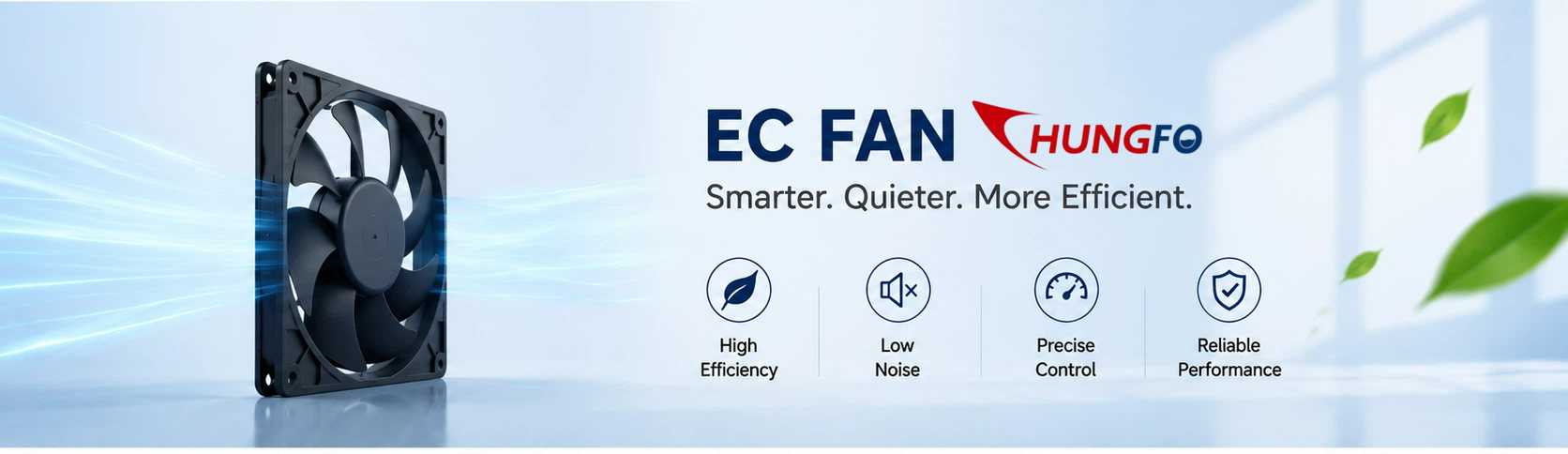
إن أهم سبب يدفع مصنعي ومهندسي أنظمة التدفئة والتهوية وتكييف الهواء إلى التفكير في مراوح EC هو كفاءة الطاقة.
تتأثر طاقة المروحة بشكل كبير بالسرعة. ففي العديد من أنظمة المراوح التي تعمل في ظروف مماثلة، يمكن أن يؤدي خفض سرعة المروحة إلى انخفاض كبير في قدرة عمود الدوران المطلوبة. وتوضح جمعية مهندسي التدفئة والتبريد وتكييف الهواء الأمريكية (ASHRAE) أن قدرة عمود دوران المروحة تتناسب تقريبًا مع مكعب السرعة وفقًا لقانون التقارب. وهذا يعني أن انخفاضًا طفيفًا نسبيًا في السرعة يمكن أن يؤدي إلى انخفاض أكبر بكثير في طاقة المروحة.
على سبيل المثال، إذا كان بإمكان مروحة نظام التدفئة والتهوية وتكييف الهواء تقليل سرعتها إلى حوالي 80 بالمائة من السرعة الكاملة، فإن متطلبات الطاقة النظرية للمروحة يمكن أن تنخفض إلى حوالي 51 بالمائة من القيمة الأصلية في ظل ظروف قانون التقارب المناسبة.
عند سرعة تقارب 70 بالمائة، يمكن أن ينخفض متطلب الطاقة النظري إلى حوالي 34 بالمائة.
عند سرعة تقارب 50 بالمائة، يمكن أن تنخفض إلى حوالي 13 بالمائة.
هذه الأرقام نظرية، ويعتمد الأداء الفعلي لأنظمة التدفئة والتهوية وتكييف الهواء على منحنى المروحة، ومقاومة النظام، وكفاءة المحرك، وطريقة التحكم، ومتطلبات الضغط، ونقطة التشغيل. ومع ذلك، فهي توضح سبب قوة تشغيل المروحة متغيرة السرعة.
هذا أحد أهم الفروق بين مروحة التيار المستمر ومحرك التيار المتردد التقليدي ذي السرعة الثابتة.
قد يتطلب تشغيل المحرك التقليدي سرعة عالية نسبيًا واستخدام وسائل ميكانيكية أو كهربائية لتقييد تدفق الهواء. أما مروحة التيار المستمر، فتستطيع خفض سرعة المحرك مباشرةً، بحيث تُنتج المروحة تدفق الهواء المطلوب للنظام فقط.
والنتيجة هي تقليل الطاقة المهدرة.
تُشير جمعية مهندسي التدفئة والتبريد وتكييف الهواء الأمريكية (ASHRAE) تحديدًا إلى الأداء القوي لمحركات التيار المستمر عند الأحمال الجزئية كإحدى مزاياها الرئيسية. وفي وحدات التكييف الطرفية التي تعمل بالمراوح، تُفيد الجمعية بأن محركات التيار المستمر تستهلك طاقة أقل بكثير من محركات التيار المتردد عند تدفق الهواء التصميمي المعتاد، مع إمكانية تحقيق مزايا أكبر عند انخفاض تدفق الهواء.
هذا الأمر مهم لأن أنظمة التدفئة والتهوية وتكييف الهواء تقضي وقتاً طويلاً في التشغيل بعيداً عن ذروة الحمل.
لا يعمل النظام المصمم لأشد أيام السنة حرارةً بأقصى طاقته للتبريد في كل ساعة من ساعات السنة. لذا، فإن تقييم كفاءة المحرك عند الحمل الكامل فقط قد لا يعطي صورة كاملة عن استهلاك الطاقة السنوي.
السؤال الأفضل ليس ببساطة: "أي محرك لديه أعلى كفاءة مصنفة؟"
والسؤال الأفضل هو: "ما مدى كفاءة عمل المروحة عبر كامل نطاق الحمل السنوي؟"
وهنا تبرز جاذبية تقنية الإلكترونيات الاستهلاكية بشكل خاص.
الميزة الثانية بالتحديد: كفاءة ممتازة في الأحمال الجزئية
يُعد التشغيل الجزئي أحد أقوى الحجج لاستبدال محركات مراوح التيار المتردد التقليدية بتقنية التيار المستمر.
غالبًا ما تكون أنظمة التدفئة والتهوية وتكييف الهواء (HVAC) أكبر من اللازم مقارنةً بالحمل اللحظي، لأن المعدات يجب أن تكون قادرة على التعامل مع ظروف الذروة. وتوضح أبحاث جمعية مهندسي التدفئة والتبريد وتكييف الهواء الأمريكية (ASHRAE) حول وحدات ملفات المروحة أن هذه الأنظمة نادرًا ما تعمل بكامل طاقتها لفترات طويلة، مما يجعل تعديل الحمل فرصة مهمة لخفض استهلاك الطاقة.
غالباً ما تعمل المحركات التقليدية بكفاءة ضمن نطاق تشغيل أضيق. فعندما يلزم تقليل تدفق الهواء، قد يقوم النظام التقليدي بتشغيل المحرك وإيقافه بشكل دوري أو استخدام عدد محدود من إعدادات السرعة.
قد يؤدي ذلك إلى استهلاك غير ضروري للطاقة.
يمكن لمروحة EC أن تضبط سرعتها باستمرار.
لنفترض أن وحدة مروحة ملفية تتطلب تدفق هواء بنسبة 100% خلال فترة التبريد القصوى. لاحقًا، ينخفض الحمل الحراري، ويصبح النظام بحاجة إلى 60% فقط من تدفق الهواء. بدلًا من الاستمرار في العمل بأقصى سرعة والتوقف المتكرر، يمكن للمروحة ذات التبريد الكهربائي خفض سرعتها والحفاظ على تدفق هواء أقل.
وهذا يحسن كفاءة الطاقة والتحكم في درجة الحرارة.
كما أن انخفاض معدل تدفق الهواء يمكن أن يقلل من انتقال الحرارة غير الضروري ويساعد نظام التدفئة والتهوية وتكييف الهواء على العمل بشكل أقرب إلى الطلب الحراري الفعلي.
أظهرت الأبحاث المرتبطة بمعيار ASHRAE RP-1741 أن التحكم في التعديل يمكن أن يقلل بشكل كبير من طاقة المروحة مقارنة باستراتيجيات التدوير التقليدية، وأشارت عمليات محاكاة طاقة المباني إلى أن وفورات نظام التدفئة والتهوية وتكييف الهواء يمكن أن تكون كبيرة عند تعديل تدفق الهواء وتدفق المياه وفقًا للحمل.
وهذا الأمر ذو أهمية خاصة للمباني التجارية الحديثة حيث تتغير أحمال أنظمة التدفئة والتهوية وتكييف الهواء باستمرار.
الميزة الثالثة بالضبط: تحكم أكثر دقة في تدفق الهواء
إن التحكم في تدفق الهواء ليس مجرد مسألة طاقة.
يؤثر ذلك بشكل مباشر على درجة الحرارة والرطوبة وجودة الهواء الداخلي وتوازن الضغط وراحة شاغلي المبنى.
Traditional AC motors may provide a simple high, medium, and low speed arrangement. This can work, but it limits the number of available operating points.
An EC fan can support much more precise speed control.
Depending on the model and control architecture, EC fans can accept analog or digital control signals and can be integrated with building automation systems. ASHRAE describes EC motors as devices that can respond to local or remote control signals and can support dynamic airflow control.
For example, a building management system can determine that a particular zone requires less cooling and send a lower speed command to the fan.
The fan responds immediately.
When the load increases, the speed can increase.
This creates a much closer relationship between actual building demand and fan output.
For modern HVAC equipment, that relationship is extremely valuable.
Exact Advantage Four: Better Compatibility With Smart HVAC Systems
Modern HVAC equipment is becoming increasingly connected.
Building automation systems can monitor temperature, humidity, pressure, occupancy, air quality, energy consumption, and other parameters. The HVAC system can then adjust operation according to those conditions.
An EC fan fits naturally into this architecture because the motor controller is already electronic.
Traditional AC motors can also be controlled electronically, but additional components may be required depending on the motor type and control strategy. This can increase system complexity.
An EC fan can integrate speed control directly into the fan motor assembly.
This creates a cleaner system architecture.
It can also reduce the amount of external control hardware required.
For HVAC manufacturers, this can simplify wiring and system integration.
For building operators, it can provide more flexible control.
For engineers, it can make it easier to develop demand-based airflow strategies.
The advantage becomes even more important when multiple fans are installed in a large HVAC system.
Instead of treating every fan as a simple fixed-speed device, the control system can coordinate fan speed with system demand.
Exact Advantage Five: Lower Noise During Reduced Load Operation
Noise is another major consideration in HVAC applications.
A fan operating at high speed generates more aerodynamic noise and motor-related noise than the same fan operating at a lower speed.
Traditional HVAC systems may need to operate a fan at a relatively high fixed speed and use cycling or other methods to manage demand.
An EC fan can reduce its speed when maximum airflow is unnecessary.
Lower speed generally means lower aerodynamic noise, although the exact noise reduction depends on fan geometry, air pressure, turbulence, mounting, duct design, bearings, and motor construction.
This is particularly useful in environments where acoustic comfort matters.
Examples include offices, hotels, hospitals, laboratories, residential buildings, classrooms, libraries, and commercial spaces.
A quieter HVAC system does not simply make the building more comfortable.
It can also improve the perceived quality of the HVAC equipment.
For manufacturers, this creates an opportunity to develop products that combine efficient airflow with low acoustic output.
Exact Advantage Six: Reduced Motor Heat
Motor efficiency is not only about electricity consumption.
Electrical losses become heat.
When a motor is less efficient, more of the input electrical energy is converted into unwanted heat. In HVAC equipment, that heat can become part of the thermal load that the system must manage.
ASHRAE notes that PSC motor inefficiency can manifest as motor heat added to the supply air. In some fan-powered terminal applications, this can increase the air temperature and reduce overall system efficiency.
EC motors can reduce this unwanted heat generation because of their higher efficiency and better part-load characteristics.
This is particularly useful in compact HVAC equipment where components are installed close together.
Lower internal heat can contribute to improved thermal conditions for nearby electronics and other components.
For compact air handling equipment, refrigeration systems, and integrated ventilation products, every reduction in unnecessary heat can be valuable.
Exact Advantage Seven: Compact And Integrated System Design
EC fans are often designed as integrated motor and fan assemblies.
The motor, controller, and impeller can be engineered as one system.
This is different from many traditional arrangements where the motor, control equipment, and fan are separate components.
An integrated EC design can reduce the need for external speed-control hardware and simplify installation.
It can also make the complete assembly more compact.
For equipment manufacturers, compactness can be important because modern HVAC products are often designed around strict dimensional requirements.
A smaller control footprint can create more room for heat exchangers, filters, insulation, electronics, or airflow passages.
This is especially valuable in packaged HVAC systems where internal space is limited.
Exact Advantage Eight: Easier Variable-Speed Retrofit Potential
Replacing an old AC motor is not always as simple as removing one motor and installing an EC fan.
The airflow requirement, static pressure, mounting dimensions, electrical supply, control signal, fan curve, and operating environment must all be considered.
However, EC technology can be attractive for retrofit projects because an integrated variable-speed fan can potentially replace a conventional fixed-speed fan assembly without requiring a completely new HVAC system.
The retrofit must be engineered carefully.
The replacement fan needs to deliver the required airflow and static pressure.
The electrical characteristics must be compatible with the equipment.
The control signal must be compatible with the existing controller or a suitable interface must be added.
The physical dimensions must fit the available installation space.
The result should be evaluated based on annual energy consumption rather than simply motor nameplate power.
This is particularly important because the greatest EC advantage often appears when the HVAC equipment spends significant time at part load.
Exact Advantage Nine: Better System Efficiency Than Simple Airflow Throttling
A common traditional strategy is to keep a fan running at a relatively high speed and then reduce effective airflow through dampers or other restrictions.
This approach can waste energy because the motor continues producing pressure that the system does not actually need.
EC technology takes a different approach.
Instead of forcing the fan to produce unnecessary pressure and then restricting the airflow, the control system can reduce the fan speed.
This allows the fan to operate closer to the required operating point.
The principle is simple.
Do not generate airflow that the building does not need.
Do not generate pressure that the system does not require.
Do not consume electrical power simply to overcome an unnecessary restriction.
The same philosophy can be applied to ventilation systems, air handling units, fan coil units, refrigeration equipment, and many other applications.
Exact Advantage Ten: Better Temperature And Humidity Management
HVAC control is not only about reaching a temperature setpoint.
Humidity and thermal stability are also important.
A fixed-speed fan can create larger changes between full-load operation and off periods. An EC fan with appropriate control can operate at a lower continuous airflow when the load is reduced.
This can help maintain a more stable indoor environment.
ASHRAE describes fully modulating EC fan coil systems as capable of varying fan speed according to control signals, with potential benefits for temperature and humidity stability as well as energy consumption.
This does not mean that every EC fan automatically provides perfect humidity control.
System design still matters.
The fan, coil, valve, controller, sensor, duct system, and building load must work together.
However, the EC motor provides the control capability required for much more sophisticated HVAC operation.
Why An EC Fan Can Be Better For Modern Air Handling Units
Air handling units often experience continuously changing operating conditions.
Outdoor air requirements change.
Filter pressure changes.
Building occupancy changes.
Cooling and heating loads change.
Static pressure changes.
A traditional fixed-speed AC motor can operate reliably under these conditions, but it does not inherently respond intelligently to them.
An EC fan can.
A controller can increase speed when airflow demand rises and reduce speed when demand falls.
The result is a fan system that behaves more like an active component of the HVAC control strategy rather than a simple motor that is switched on and off.
This distinction is increasingly important as commercial buildings become more automated.
Why EC Technology Is Valuable In Fan Coil Units
Fan coil units are another important application.
Traditional fan coil units often use three-speed motors.
The user or thermostat selects low, medium, or high speed.
This arrangement is simple, but the system only has a limited number of operating points.
Modern EC fan coil units can provide multiple speed levels or continuous modulation.
ASHRAE identifies EC motors as an increasingly common option for fan coil units and notes their advantages in energy efficiency, controllability, operating range, and comfort.
For hotels and offices, this can be particularly useful because room loads can vary significantly.
For example, a hotel room may have very different cooling requirements when occupied compared with when it is empty.
A variable-speed EC fan can respond to this difference.
The system does not have to operate as though the room is always at peak load.
EC Fans In Ventilation And Exhaust Applications
EC technology is not limited to cooling systems.
It can also be applied to ventilation, exhaust, air circulation, and fresh-air systems.
A ventilation system may need maximum airflow during occupied periods and reduced airflow at other times.
With an EC fan, the system can adjust airflow based on demand.
This can be useful in commercial buildings, industrial facilities, laboratories, kitchens, parking areas, and other ventilation environments.
The exact fan type depends on the required airflow and pressure.
For applications requiring direct airflow through a relatively open path, an Axial Fan can be an effective choice.
For applications requiring higher pressure or airflow through filters, coils, ducts, and compact passages, a centrifugal fan or blower may be more appropriate.
The key point is that EC motor technology can be integrated with different fan geometries.
This means engineers should not think of EC technology as a single fan shape.
It is a motor and control architecture that can be combined with the fan design required by the application.
EC Technology For Compact HVAC And Electronic Cooling
The demand for smaller HVAC and thermal management systems is also increasing.
Compact equipment requires smaller motors and fans that can deliver stable airflow without consuming excessive energy.
In these applications, anac dc small fanmay provide a useful solution when compact size, electrical flexibility, and controlled airflow are important.
Small EC or electronically controlled fan assemblies can be used in compact ventilation systems, control cabinets, refrigeration equipment, heat pump electronics, communication equipment, and other thermal management systems.
The same engineering principle remains important.
The fan should be selected according to airflow, static pressure, voltage, speed, noise, operating temperature, expected lifetime, and control requirements.
A small fan that consumes little electricity but cannot overcome the system resistance is not an efficient solution.
Fan performance must always be evaluated at the actual operating point.
EC Fans And Specialized Cooling Applications
Modern product development also creates demand for customized cooling components.
For example, rapid prototyping and customized equipment development can involve3d print cooling fansolutions where airflow is needed to control temperatures around printed parts, electronic modules, motors, or compact equipment.
Although the exact fan selection depends on the application, EC fan technology can provide advantages when the cooling requirement changes during operation.
The ability to adjust speed allows designers to avoid using maximum airflow continuously.
This can reduce noise and energy consumption while maintaining the required thermal conditions.
The same concept can be extended beyond additive manufacturing to laboratory equipment, automation systems, robotics, battery systems, and electronic enclosures.
EC Fan Selection: What Engineers Should Actually Compare
It is easy to compare an EC fan and an AC motor based only on motor efficiency.
That is not enough.
A professional comparison should include the complete fan system.
The first parameter is airflow.
How much air must the fan move?
The second parameter is static pressure.
What resistance must the fan overcome?
The third parameter is operating time.
How many hours per year will the fan operate?
The fourth parameter is load profile.
Will the fan operate continuously at full speed, or will it spend much of its time at partial load?
The fifth parameter is control method.
Does the system require on and off operation, three fixed speeds, or continuous variable-speed control?
The sixth parameter is acoustic performance.
Is the HVAC equipment installed in a residential, office, hospital, hotel, laboratory, or industrial environment?
The seventh parameter is electrical compatibility.
What voltage and control signals are available?
The eighth parameter is environmental performance.
Will the fan operate in high humidity, high temperature, dusty environments, or other demanding conditions?
The ninth parameter is mechanical compatibility.
Does the fan fit the existing mounting arrangement?
The tenth parameter is lifecycle cost.
The cheapest motor at purchase may not be the cheapest solution over ten years.
Purchase Price Versus Total Cost Of Ownership
One reason traditional AC motors remain popular is initial cost.
They are familiar products with established supply chains.
EC fan assemblies may have a higher initial purchase price because they include electronic controls and more sophisticated motor technology.
However, purchase price is only one part of the economic equation.
HVAC equipment may operate thousands of hours per year.
Even a modest reduction in power consumption can accumulate into significant annual savings.
If the fan operates continuously, the difference becomes even more important.
This is why EC fan selection should be based on lifecycle economics.
Engineers should compare annual kilowatt-hours, expected operating hours, maintenance requirements, replacement costs, and control requirements.
A higher initial investment can make sense when the annual operating savings and system benefits are sufficiently large.
When Traditional AC Motors May Still Make Sense
EC technology has many advantages, but it does not mean that traditional AC motors are always wrong.
A simple AC motor may still be suitable for applications with very low operating hours, simple on and off control, limited speed requirements, strict initial-cost targets, or existing infrastructure designed specifically around conventional motors.
For some large industrial systems, a conventional motor combined with a properly selected variable frequency drive can also provide excellent efficiency and speed control.
The decision should therefore be based on the actual application rather than technology preference alone.
A good engineering decision compares the complete system.
EC Versus AC: The Most Important Practical Difference
If the comparison has to be reduced to one sentence, the biggest difference is this:
A traditional AC motor is often treated primarily as a power source for the fan, while an EC fan can function as an integrated airflow control system.
That difference affects almost everything else.
Because the EC fan can vary speed, it can reduce energy consumption.
Because it can respond to control signals, it can improve airflow regulation.
Because it can operate at lower speeds, it can reduce noise.
Because its controller is integrated, it can simplify system architecture.
Because it can match output to load, it can improve part-load performance.
Because it can communicate with modern control systems, it can support smart HVAC applications.
This is why EC technology has become increasingly relevant to modern HVAC engineering.
The Role Of Fan Manufacturers In EC HVAC Development
Choosing the right motor technology is only part of the process.
The fan itself must also be designed correctly.
An efficient motor connected to an inefficient impeller will not automatically create an efficient HVAC system.
The impeller geometry, housing design, airflow path, motor characteristics, bearing system, balancing accuracy, vibration performance, acoustic design, and control algorithm all influence the final result.
For this reason, experienced fan manufacturers need to evaluate the complete fan assembly.
Chungfo Fan focuses on fan and motor technologies for different thermal management and air movement applications. For HVAC-related products, the engineering process should begin with the actual application requirements rather than simply selecting a motor from a catalog.
The required airflow, static pressure, voltage, speed, noise level, installation dimensions, control method, operating temperature, and expected service life should all be considered.
A properly selected fan can help HVAC manufacturers achieve a better balance between efficiency, acoustic performance, reliability, and system cost.

Why EC Fans Are Becoming A Strategic HVAC Choice
The HVAC industry is changing from simple fixed-speed operation toward intelligent load matching.
Buildings are becoming more automated.
Energy efficiency requirements are becoming more demanding.
Occupants expect better acoustic comfort.
Equipment is becoming more compact.
Maintenance and lifecycle costs are receiving more attention.
These trends all favor technologies that can adapt to changing conditions.
EC fans fit this direction very well.
They are not simply a replacement for a traditional AC motor.
They represent a different approach to fan system design.
Instead of generating a fixed amount of airflow and controlling the result through cycling or restriction, an EC fan can adjust its output directly.
This is a fundamental reason why EC technology can provide strong advantages in modern HVAC systems.
Final Conclusion
The exact advantages of EC fans over traditional AC motors in HVAC systems can be summarized through several connected benefits.
EC fans can provide higher efficiency, especially during part-load operation. They can provide continuous or flexible speed control, respond to temperature and airflow requirements, reduce unnecessary fan power, lower operating noise at reduced speed, reduce motor heat, simplify electronic integration, and support modern building automation systems.
The most important point is that these advantages are not independent.
Variable-speed control makes part-load efficiency possible.
Part-load efficiency reduces energy consumption.
Lower speed can reduce noise.
Integrated electronic control improves system responsiveness.
Better airflow control can improve comfort.
Lower motor losses can reduce unwanted heat.
Together, these characteristics can make an EC fan a more complete solution for modern HVAC equipment.
However, EC technology should always be selected according to the actual duty point. Engineers should compare airflow, static pressure, speed range, efficiency, control compatibility, acoustic performance, operating hours, environmental conditions, installation dimensions, and total lifecycle cost.
For new HVAC designs, EC fans are especially attractive when variable airflow and long operating hours are expected.
For retrofit projects, they can also provide an opportunity to improve the efficiency and controllability of existing equipment, provided that the replacement is correctly matched to the original system.
As HVAC systems continue to become more intelligent and energy conscious, the value of an efficient, controllable, and integrated fan will continue to increase.
For manufacturers and system designers, the question is therefore no longer simply whether an EC fan can replace a traditional AC motor.
The more important question is whether the HVAC system can benefit from continuously matching fan output to actual demand.
In many modern HVAC applications, that is exactly where EC fan technology provides its greatest advantage.
FAQ
What is the main advantage of an EC fan over a traditional AC motor?
The main advantage is the combination of high efficiency and variable-speed control. An EC fan can adjust airflow according to actual HVAC demand instead of operating only at fixed speed or relying heavily on cycling and airflow restriction.
Are EC fans more energy efficient than traditional AC motors?
في العديد من تطبيقات التكييف والتهوية، نعم، خاصةً عندما يعمل النظام بحمل جزئي لفترات طويلة. وتعتمد قيمة التوفير الدقيقة على المروحة والمحرك ونقطة التشغيل والضغط الساكن واستراتيجية التحكم والجدول الزمني السنوي للتشغيل. وتُشير جمعية مهندسي التدفئة والتبريد وتكييف الهواء الأمريكية (ASHRAE) إلى أن كفاءة التشغيل العالية عند الأحمال الجزئية وسهولة التحكم من أهم مزايا محركات التيار المستمر.
هل يمكن لمروحة EC أن تعمل بسرعة متغيرة؟
نعم. يُعدّ التشغيل بسرعات متغيرة من أهم خصائص تقنية مراوح EC. وبحسب التصميم، يمكن للمروحة استقبال إشارات تحكم تناظرية أو رقمية أو غيرها، وتعديل سرعتها لتتناسب مع متطلبات تدفق الهواء.
هل مراوح EC مناسبة لوحدات معالجة الهواء؟
نعم. يمكن استخدام مراوح EC في وحدات معالجة الهواء حيث يكون تدفق الهواء المتغير، وكفاءة الطاقة، وانخفاض مستوى الضوضاء، والتحكم الذكي أمورًا مهمة. كما يمكن دمجها في استراتيجيات إدارة المباني.
هل يمكن لمراوح التيار المستمر أن تحل محل محركات التيار المتردد التقليدية في أنظمة التكييف والتهوية الحالية؟
من المحتمل ذلك، ولكن لا ينبغي أن يعتمد الاستبدال على أبعاد المحرك فقط. يجب فحص تدفق الهواء، والضغط الساكن، والجهد، وإشارات التحكم، وأبعاد التركيب، ومنحنى المروحة، ودرجة حرارة التشغيل، والضوضاء، وتوافق النظام قبل الاستبدال.
هل مراوح التيار المستمر أكثر هدوءًا من مراوح التيار المتردد التقليدية؟
يمكن أن تكون هذه المراوح أكثر هدوءًا أثناء التشغيل بسرعات منخفضة، لأن انخفاض سرعة المروحة يقلل عمومًا من الضوضاء الديناميكية الهوائية. ومع ذلك، يعتمد مستوى الضوضاء الفعلي على تصميم المروحة بالكامل، وتدفق الهواء، والضغط، وشكل المروحة، وطريقة التركيب، ونظام مجاري الهواء، ونقطة التشغيل.
هل مراوح التيار المستمر أغلى من محركات التيار المتردد التقليدية؟
قد يكون سعر الشراء الأولي أعلى لأن وحدة التحكم الإلكترونية تتضمن تقنية تحكم إلكترونية. ومع ذلك، قد تكون التكلفة الإجمالية للملكية أقل عندما تعمل المروحة لفترات طويلة وتستفيد من توفير الطاقة الناتج عن السرعة المتغيرة.
كيف ينبغي للمهندسين اختيار مروحة EC لمعدات التكييف والتهوية؟
ينبغي على المهندسين أولاً تحديد تدفق الهواء والضغط الساكن المطلوبين. ثم عليهم تقييم نطاق السرعة، والمتطلبات الكهربائية، ومستوى الضوضاء، ودرجة حرارة التشغيل، والأبعاد، وواجهة التحكم، والموثوقية، والكفاءة، وظروف التشغيل السنوية. إن مقارنة المراوح بناءً على أقصى تدفق للهواء أو قدرة المحرك المقدرة فقط قد يؤدي إلى اختيار غير مناسب.
لماذا أصبحت مراوح EC أكثر شيوعاً في أنظمة التدفئة والتهوية وتكييف الهواء الحديثة؟
تتطلب أنظمة التكييف والتهوية الحديثة بشكل متزايد تدفق هواء متغير، وكفاءة في استهلاك الطاقة، وتحكمًا دقيقًا، وضوضاء منخفضة، وتوافقًا مع أنظمة أتمتة المباني. تجمع تقنية EC هذه الإمكانيات في حل متكامل للمروحة والمحرك، مما يجعلها مناسبة بشكل خاص لتطبيقات التكييف والتهوية الحديثة.