فئات
بلوق جديد
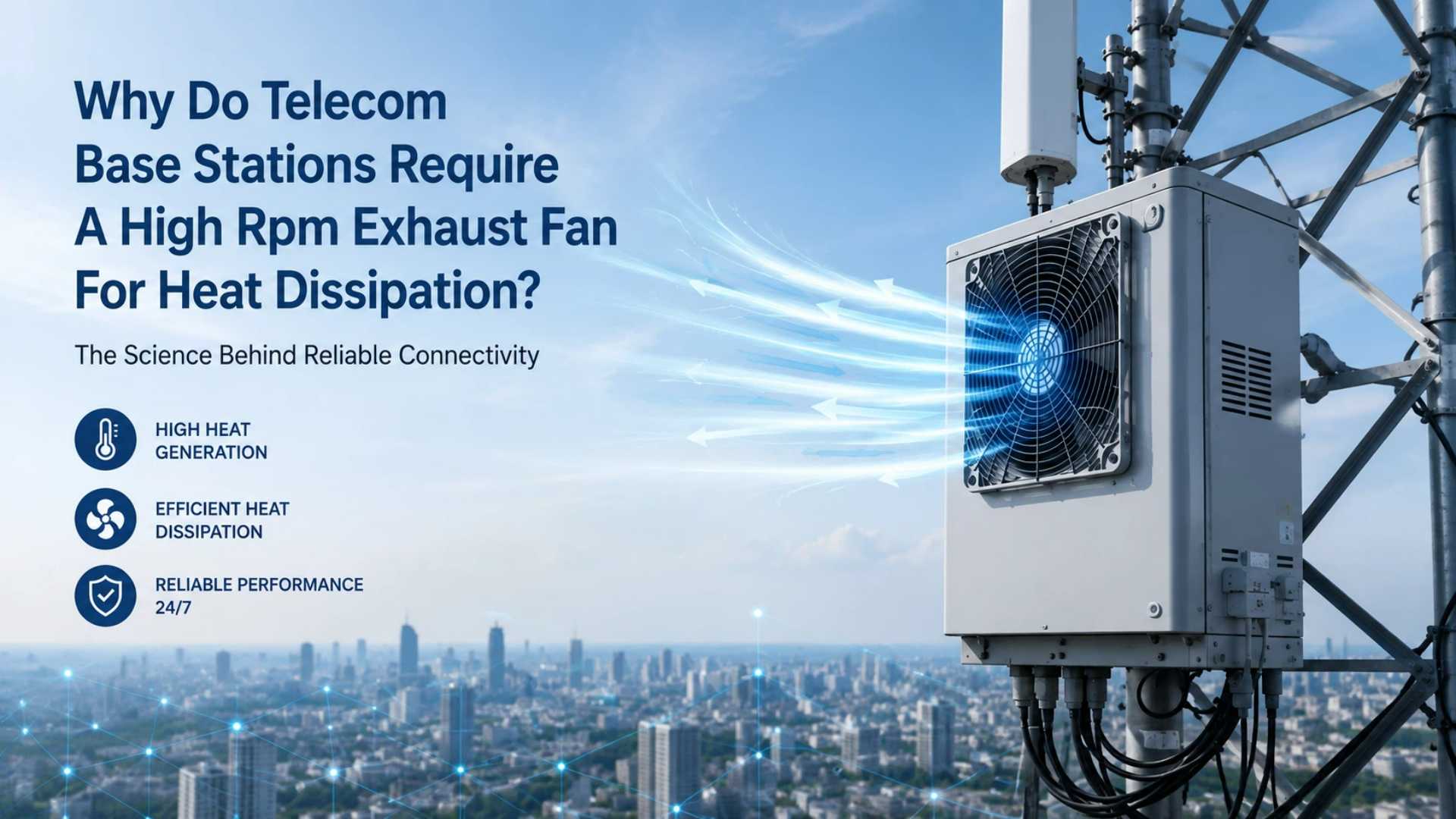
لماذا تتطلب محطات الاتصالات الأساسية مروحة عادم ذات دورات عالية في الدقيقة لتبديد الحرارة؟
August 26 , 2026تُعدّ محطات الاتصالات الأساسية حجر الزاوية في شبكات الاتصالات اللاسلكية الحديثة. بدءًا من محطات الجيل الرابع الكبيرة وخلايا الجيل الخامس الصغيرة، وصولًا إلى خزائن الاتصالات الخارجية، ووحدات الراديو، ومعدات النطاق الأساسي، وأنظمة الاتصالات الطرفية، يجب أن تعمل هذه المنشآت باستمرار في ظل ظروف بيئية قاسية. وعلى عكس المنتجات الإلكترونية العادية، يُتوقع من محطات الاتصالات الأساسية أن تظل عاملة على مدار الساعة، غالبًا في مواقع يصعب فيها الصيانة وتتغير فيها درجات الحرارة المحيطة بشكل كبير.
مع ازدياد سرعة تقنيات الاتصالات وتطور المعدات لتصبح أكثر انضغاطًا، باتت إدارة الحرارة عنصرًا بالغ الأهمية في تصميم محطات البث. فزيادة قدرة المعالجة، وارتفاع سعة الإرسال، وكثافة المعدات، كلها عوامل تؤدي إلى توليد حرارة أعلى بكثير داخل خزائن الاتصالات. وإذا لم تُبدّد هذه الحرارة بكفاءة، فقد ترتفع درجات الحرارة الداخلية، مما يُسبب انخفاضًا في الأداء، وتدهورًا في الأداء، وتقادمًا للمكونات، وظهور إنذارات، أو حتى توقفات مفاجئة.
يُعدّ هذا أحد الأسباب الرئيسية التي تجعل مراوح العادم عالية السرعة خيارًا شائعًا لأنظمة تبريد محطات الاتصالات. إذ تُولّد المروحة عالية السرعة تدفق هواء قويًا في مساحة تركيب صغيرة، مما يُحسّن من تبديد الحرارة ويُساعد في الحفاظ على درجة حرارة ثابتة حول المكونات الإلكترونية الحساسة. مع ذلك، لا تُحدّد سرعة الدوران وحدها مدى ملاءمة المروحة، بل يجب مراعاة عوامل أخرى مجتمعة، مثل تدفق الهواء، والضغط الساكن، وشكل المروحة، وجهد التشغيل، والموثوقية، وحماية البيئة، ووظائف التحكم.
بالنسبة لمصنعي معدات الاتصالات ومكاملي الأنظمة، فإن فهم العلاقة بين سرعة المروحة والأداء الحراري أمر ضروري عند اختيار مروحة تبريد لمحطة أساسية.
لماذا تولد محطات الاتصالات الأساسية كل هذه الحرارة؟
تستهلك جميع الأجهزة الإلكترونية تقريبًا داخل محطة الاتصالات الأساسية الطاقة الكهربائية، ويتحول جزء كبير من هذه الطاقة في النهاية إلى حرارة. ويمكن أن تساهم معدات الترددات الراديوية، ووحدات معالجة النطاق الأساسي، ومصادر الطاقة، والوحدات الضوئية، والمحولات، وأجهزة التوجيه، والمكونات الإلكترونية الأخرى في الحمل الحراري الإجمالي.
يصبح الوضع أكثر تعقيداً في بنية الجيل الخامس، لأن معدات الاتصالات الحديثة مصممة لمعالجة كميات أكبر بكثير من البيانات بزمن استجابة أقل. قد يؤدي ارتفاع أداء المعالجة إلى زيادة استهلاك الطاقة، بينما قد يؤدي صغر حجم المعدات إلى زيادة كثافة الحرارة داخل حيز محدود.
لا تكمن المشكلة في كمية الحرارة الإجمالية فحسب، بل في توزيعها أيضاً. فقد يكون متوسط درجة حرارة الخزانة مقبولاً، بينما تتعرض بعض المكونات لدرجات حرارة موضعية أعلى بكثير. ويمكن أن تشكل هذه النقاط الساخنة الموضعية خطراً بالغاً على أشباه موصلات الطاقة، والمعالجات، ووحدات الاتصالات، وغيرها من المكونات الحساسة للحرارة.
أبرزت الأبحاث المتعلقة بتبريد محطات الاتصالات أهمية تنظيم تدفق الهواء، إذ أن سوء توزيعه قد يؤدي إلى ظهور بؤر ساخنة موضعية وارتفاع درجة حرارة معدات الاتصالات. وفي إحدى الدراسات الميدانية، تبين أن تحسين توزيع الهواء عاملٌ مهم في الحفاظ على درجة حرارة المعدات وتقليل استهلاك طاقة التبريد.
لهذا السبب، لا ينبغي أن تقتصر وظيفة مروحة العادم المصممة بشكل صحيح على تحريك الهواء فحسب، بل يجب أن تساعد في إنشاء مسار تدفق هواء يمكن التنبؤ به عبر الخزانة.
ما الذي تفعله مروحة العادم ذات السرعة العالية في الواقع؟
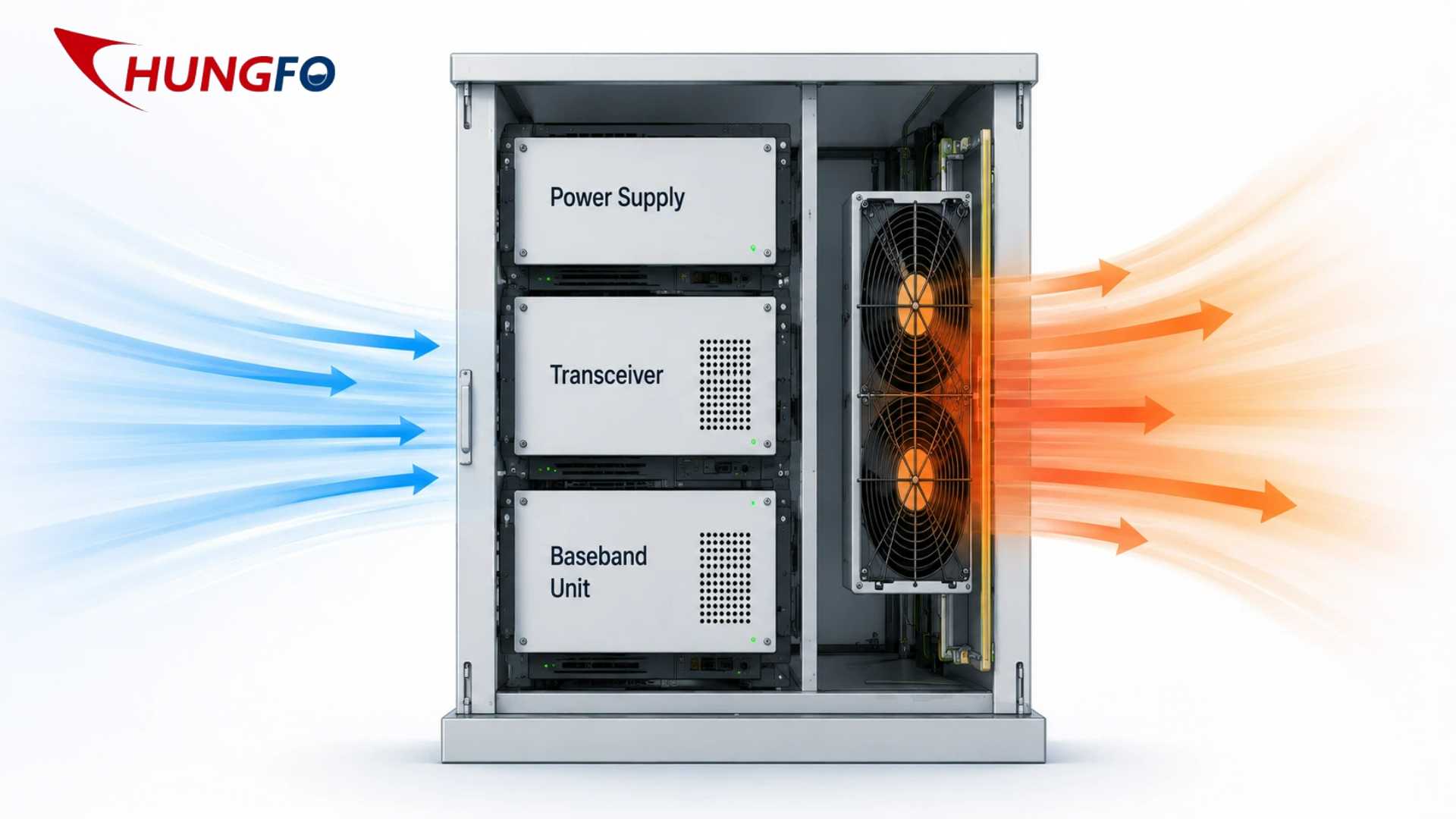
يتمثل الغرض الأساسي من مروحة العادم في إزالة الهواء الساخن من الحاوية وتشجيع دخول الهواء البارد عبر فتحات مخصصة. وهذا يخلق حملاً حرارياً قسرياً مستمراً ويمنع تراكم الحرارة حول المكونات الإلكترونية.
يشير اختصار RPM إلى عدد الدورات في الدقيقة. وبشكل عام، يمكن لزيادة سرعة المروحة أن تزيد من تدفق الهواء وقدرته على تحمل الضغط، مع العلم أن العلاقة الدقيقة بينهما تعتمد على تصميم المروحة. تستطيع المروحة ذات السرعة العالية تحريك كمية أكبر من الهواء عبر مساحة صغيرة، وقد تكون مفيدة بشكل خاص عندما يحتوي الغلاف على مرشحات أو شبكات تهوية أو مشتتات حرارية أو قنوات أو مكونات أخرى تحد من تدفق الهواء.
على سبيل المثال، قد توفر مروحة منخفضة السرعة تدفق هواء كافيًا عند تشغيلها في الهواء الطلق، ولكن قد ينخفض أداؤها بشكل ملحوظ عند تركيبها خلف شبكة أو مرشح واقٍ. وقد يوفر تصميم ذو سرعة أعلى قدرة الضغط الإضافية اللازمة للحفاظ على تدفق هواء فعال في ظل ظروف التشغيل الفعلية هذه.
لهذا السبب، ينبغي على المهندسين تجنب اختيار المراوح بناءً على معدلات تدفق الهواء الحر فقط. فالمروحة التي توفر معدل تدفق هواء عاليًا عند انعدام الضغط الساكن قد لا توفر بالضرورة تبريدًا كافيًا عند تركيبها داخل خزانة اتصالات حقيقية.
تُعد العلاقة بين تدفق الهواء والمقاومة أحد أهم المفاهيم في اختيار المروحة.
لماذا يُعد الضغط الساكن مهمًا لتبريد الاتصالات؟
يمثل الضغط الساكن قدرة المروحة على التغلب على المقاومة في مسار تدفق الهواء. في خزانة الاتصالات، نادراً ما يمر تدفق الهواء عبر بيئة مفتوحة تماماً.
قد يضطر الهواء إلى المرور عبر شبكة سحب الهواء، وفلتر الغبار، ومشتت الحرارة، والوحدات الإلكترونية، والشبكة الواقية، والقنوات الضيقة، وفتحة العادم قبل خروجه من الخزانة. كل مكون من هذه المكونات قد يتسبب في فقدان الضغط.
عندما تزداد مقاومة الضغط، يقل تدفق الهواء الفعلي للمروحة. لذلك، قد لا تعمل المروحة ذات التدفق العالي للهواء الحر بكفاءة في حيز مغلق فعلي إذا لم تتمكن من توليد ضغط كافٍ.
هذا هو المكان الذي...مروحة عادم عالية السرعةقد يُوفر ذلك ميزة. إذ تُساعد سرعة الدوران العالية المروحة على الحفاظ على تدفق هواء فعال في مواجهة مقاومة النظام المتزايدة. مع ذلك، ينبغي على المهندسين دائمًا تقييم منحنى أداء المروحة بدلًا من الاعتماد فقط على أقصى سرعة دوران أو أقصى قيمة لتدفق الهواء.
يبدأ تصميم نظام تبريد الاتصالات الجيد بتحديد متطلبات تدفق الهواء للنظام بأكمله. ينبغي على المصمم تقدير الحمل الحراري، وتحديد الارتفاع المسموح به في درجة الحرارة، وتحديد مقاومة تدفق الهواء، ثم اختيار مروحة قادرة على العمل بكفاءة عند نقطة تشغيل النظام المطلوبة.
لماذا تعتبر سرعة الدوران العالية مفيدة في خزائن الاتصالات المدمجة؟
يُعدّ الحجم أحد أهمّ القيود في معدات الاتصالات الحديثة. فمعدات الاتصالات تصغر حجماً بينما تتزايد قدرتها على المعالجة باستمرار. وهذا يعني أن المهندسين غالباً ما يحتاجون إلى تبديد المزيد من الحرارة من حجم أصغر.
قد تتمكن المروحة الأكبر حجماً من تحريك كمية أكبر من الهواء بسرعة دوران أقل، ولكن قد لا تتوافر مساحة كافية لتركيبها. لذا، تُعدّ المروحة الصغيرة ذات السرعة العالية بديلاً عملياً عندما تكون مساحة التركيب محدودة.
يُعدّ هذا الأمر بالغ الأهمية، لا سيما بالنسبة لخزائن الاتصالات الصغيرة، ووحدات الراديو، ومعدات الشبكات، والعلب الخارجية المدمجة. في هذه التطبيقات، يُمكن أن تُساعد زيادة سرعة المروحة في تحقيق الأداء الحراري المطلوب دون زيادة ملحوظة في الأبعاد الفيزيائية لنظام التبريد.
مع ذلك، لا ينبغي اعتبار السرعة العالية حلاً تلقائياً. فالسرعة العالية قد تزيد من الضوضاء والاهتزازات وإجهاد المحامل واستهلاك الطاقة. الهدف الصحيح ليس الوصول إلى أعلى سرعة دوران ممكنة، بل تحقيق تدفق الهواء والضغط المطلوبين بأقل تكلفة عملية للطاقة والضوضاء.
دور مروحة التبريد DC في معدات الاتصالات
أمروحة تبريد تعمل بالتيار المستمريُعدّ تصميم أنظمة الطاقة المستمرة (DC) جذابًا في كثير من الأحيان لمعدات الاتصالات، نظرًا لأن العديد من أنظمة الاتصالات تستخدم بالفعل بنى طاقة مستمرة. وتعمل البنية التحتية للاتصالات عادةً بأنظمة طاقة مستمرة مخصصة، مما يجعل مراوح التبريد التي تعمل بالتيار المستمر ملائمة للتكامل المباشر.
يمكن لمروحة التيار المستمر أيضًا دعم التحكم في السرعة والمراقبة والإدارة الحرارية على مستوى النظام. وبحسب التصميم، يمكن استخدام إشارات التحكم لمراقبة سرعة المروحة أو اكتشاف حالات التشغيل غير الطبيعية.
بالنسبة لمنشآت الاتصالات البعيدة، تُعدّ هذه الخاصية بالغة الأهمية. فقد تقع محطة القاعدة في منطقة ريفية، أو على سطح مبنى، أو بجانب طريق سريع، أو في أي موقع آخر يصعب فيه إجراء فحص يدوي متكرر. وفي حال تعطل مروحة التبريد فجأة، قد يؤثر ارتفاع درجة الحرارة الناتج على معدات الاتصالات.
لذلك، غالباً ما تستفيد أنظمة التبريد الحديثة في مجال الاتصالات من المراوح التي يمكنها توفير معلومات عن السرعة، أو إنذارات الأعطال، أو وظائف مراقبة أخرى.
لماذا تُستخدم المراوح المحورية عديمة الفرش التي تعمل بالتيار المستمر على نطاق واسع؟
مراوح محورية بدون فرش تعمل بالتيار المستمرتُعد هذه الأنظمة مناسبة تمامًا للعديد من تطبيقات تبريد الاتصالات لأنها تجمع بين الأبعاد المدمجة وتدفق الهواء المباشر والتبديل الإلكتروني الفعال.
بخلاف المحركات التقليدية ذات الفرش، لا تعتمد تصميمات المحركات عديمة الفرش على الفرش الميكانيكية للتبديل. وهذا يزيل مصدراً رئيسياً للتآكل الميكانيكي، ويجعل هذه التقنية مناسبة للتطبيقات التي تتطلب فترات تشغيل متواصلة طويلة.
تقوم المروحة المحورية بتحريك الهواء بشكل عام بالتوازي مع محورها. وهذا ما يجعلها فعالة بشكل خاص عندما يكون الهدف هو تحريك كمية كبيرة من الهواء عبر خزانة أو قناة تهوية.
تستفيد معدات الاتصالات أيضًا من إمكانية التحكم في محركات التيار المستمر عديمة الفرش. يمكن تعديل سرعة المروحة وفقًا لدرجة الحرارة أو حمل المعدات. خلال فترات انخفاض الطلب الحراري، يمكن للمروحة العمل بسرعة أقل. وعندما ترتفع درجة الحرارة الداخلية، يمكن لجهاز التحكم زيادة سرعة المروحة لتوفير قدرة تبريد إضافية.
يمكن لهذا النهج أن يقلل من استهلاك الطاقة والضوضاء غير الضرورية مع الحفاظ على السلامة الحرارية.
لا يعني ارتفاع عدد دورات المروحة في الدقيقة بالضرورة تشغيلها بأقصى سرعة طوال الوقت. إذ يمكن لنظام تحكم مصمم جيدًا توفير سرعة عالية عند الحاجة، مع السماح بتشغيلها بسرعة منخفضة في الظروف العادية.
اختيار مروحة محورية لخزائن الاتصالات
يُستخدم مصطلح منفاخ المروحة المحورية أحيانًا على نطاق واسع عند مناقشة حلول التهوية القسرية، ولكن يجب على المهندسين التمييز بين خصائص تدفق الهواء المحوري والطرد المركزي عند اختيار المنتج.
تُفضّل المراوح المحورية عمومًا عندما يتطلب الأمر مرور كمية كبيرة من الهواء عبر مسار تدفق هواء مباشر نسبيًا. أما المراوح الطاردة المركزية فقد تكون أكثر ملاءمة عندما يتطلب النظام ضغطًا أعلى ويجب أن ينعطف تدفق الهواء عبر قنوات أو ممرات ضيقة.
بالنسبة لخزانة الاتصالات، يعتمد الاختيار الصحيح على هيكل الحاوية ومقاومة الضغط وبنية التبريد.
إذا كانت الخزانة تحتوي على فتحات تهوية كبيرة ومسار تدفق هواء مفتوح نسبيًا، فقد توفر المروحة المحورية حلاً فعالاً. أما إذا كان الهواء يجب أن يمر عبر مبادل حراري كثيف، أو قناة ضيقة، أو نظام مجاري هواء معقد، فقد تكون المروحة أو المنفاخ ذو الضغط العالي أكثر ملاءمة.
هذا التمييز مهم لأن اختيار نوع المروحة الخاطئ يمكن أن يؤدي إلى أداء تبريد مخيب للآمال حتى عندما يبدو تدفق الهواء المقدر كافياً.
سرعة دوران عالية وكفاءة تبديد الحرارة
يمكن تفسير إزالة الحرارة من حاوية مغلقة من خلال العلاقة الأساسية بين الحمل الحراري وتدفق الهواء وارتفاع درجة الحرارة.
عندما يقوم النظام بتوليد كمية ثابتة من الحرارة، فإن زيادة كمية الهواء المارة عبر الغلاف يمكن أن تقلل بشكل عام من ارتفاع درجة الحرارة بين الهواء الداخل والهواء الخارج، بشرط أن يكون الهواء الداخل أبرد بدرجة كافية من الهواء الداخلي.
وهذا يعني أن سرعة الدوران العالية يمكن أن تكون مفيدة عندما تكون هناك حاجة إلى تدفق هواء إضافي للتعامل مع الحمل الحراري العالي.
However, thermal performance depends on more than airflow quantity. The location of the inlet, the position of heat-generating components, the direction of fan rotation, the exhaust location and the internal structure of the cabinet all affect the actual cooling result.
If the fan creates airflow that bypasses the hottest components, the theoretical airflow rating may not translate into effective component cooling.
This is why airflow organization is as important as fan performance.
The Importance Of Airflow Direction
A successful telecom cooling system should establish a clear airflow path.
Cool air should enter from an appropriate location, pass across the heat-generating components and then leave the cabinet through an exhaust path. The airflow should not circulate unnecessarily inside the enclosure.
An exhaust fan mounted at the correct position can create negative pressure inside the cabinet and encourage air to move through the intended path.
For example, if hot air naturally accumulates near the upper part of the cabinet, an exhaust fan installed near the upper outlet can help remove that accumulated heat. At the same time, an intake opening should be positioned to provide cooler air to the equipment.
The exact configuration depends on cabinet geometry and component arrangement.
Why 5G Makes Cooling More Challenging
5G communication equipment introduces additional thermal management challenges because the infrastructure is designed for high data throughput, low latency and dense deployment.
Research has shown that increasing power density and energy consumption in 5G base stations make thermal performance and energy efficiency increasingly important. Hybrid cooling systems and cabinet-level thermal management have therefore become active areas of engineering research.
In practical applications, the cooling system must work continuously while maintaining equipment temperature under changing outdoor conditions.
An outdoor cabinet can experience high solar radiation, high ambient temperature, humidity, rain, dust and salt exposure. These factors place additional demands on the fan.
A fan that performs well in a laboratory may not necessarily provide the same reliability in a coastal outdoor cabinet.
Environmental Requirements For Telecom Exhaust Fans
Outdoor telecom equipment may operate under a wide range of environmental conditions. Temperature, humidity, dust, water, salt spray and vibration can all affect fan performance.
For outdoor applications, designers should therefore consider the appropriate protection structure, corrosion resistance, bearing technology and material selection.
The fan housing and impeller must maintain mechanical integrity under temperature changes. Bearings must be capable of supporting long continuous operation. Electronic components should be designed for the expected voltage and temperature range.
In coastal environments, salt and moisture can accelerate corrosion. In dusty environments, filters may become blocked and increase airflow resistance. This can cause the fan operating point to move toward a lower airflow condition.
A reliable telecom cooling system should therefore consider the fan and the entire ventilation system as one integrated design.
Fan Reliability Is As Important As Fan Speed
Telecom infrastructure is often expected to operate continuously for years. A fan that delivers excellent airflow but fails prematurely is not a reliable cooling solution.
Bearing selection is one important factor. Ball bearings are commonly considered for applications requiring long service life and wide operating conditions, while sleeve bearing designs may be suitable for certain cost-sensitive or controlled environments.
Motor quality, winding design, electronic commutation, impeller balance and manufacturing consistency also affect service life.
Dynamic balancing is particularly important for high RPM fans. As rotational speed increases, imbalance can create greater vibration and mechanical stress. A properly balanced impeller helps reduce vibration and improves overall operating stability.
This is why high RPM fan manufacturing requires careful control of mechanical tolerances and production quality.
Noise And High RPM
One disadvantage of high RPM operation is increased noise.
Telecom equipment may be installed near offices, residential areas, transportation infrastructure or other locations where acoustic performance matters. A fan running continuously at maximum speed can generate unnecessary noise if the thermal load is actually low.
The solution is not necessarily to avoid high RPM fans. Instead, the system can use intelligent speed control.
Temperature sensors can monitor the internal environment and adjust fan speed according to thermal demand. When the cabinet is cool, the fan can operate at a lower speed. When temperature increases, the controller can increase RPM.
This provides a balance between cooling capacity, energy consumption and noise.
Energy Efficiency In Base Station Cooling
Cooling can represent a significant part of the overall energy consumption of communication infrastructure. Therefore, thermal management must balance reliability with energy efficiency.
A fan that operates at unnecessarily high speed consumes more energy than required. On the other hand, reducing fan speed too much can increase internal temperature and compromise equipment reliability.
Recent research into 5G base station cooling has focused on optimizing cooling operation and fan speed to reduce energy consumption while maintaining thermal requirements.
This supports an important engineering principle: the best fan is not necessarily the fan with the highest RPM. The best fan is the fan that provides sufficient cooling performance under the real operating conditions while maintaining acceptable energy consumption and reliability.
Fan Redundancy For Critical Telecom Equipment
Because communication networks are critical infrastructure, redundancy can be an important part of cooling system design.
If one cooling fan fails, another fan may continue to provide sufficient airflow until maintenance can be performed. In higher-reliability systems, multiple fans can operate together so that the system retains cooling capacity even after one fan experiences a fault.
This is commonly described through configurations such as N plus 1 redundancy.
Fan monitoring can further improve reliability. Speed feedback can help detect a stalled or degraded fan, while alarm signals can notify the control system when abnormal conditions occur.
For remote base stations, this type of monitoring can reduce maintenance response time and help prevent thermal failures.
How To Select A High RPM Exhaust Fan For A Base Station
The selection process should begin with the thermal load rather than the fan itself.
First, determine the amount of heat generated by the equipment. Next, identify the maximum allowable internal temperature and the expected ambient temperature. Then calculate the required airflow and evaluate the pressure losses created by filters, grilles, heat sinks and enclosure structures.
After that, compare fan performance curves.
Engineers should evaluate airflow at the actual static pressure rather than relying on the free-air airflow value. Rated voltage, operating voltage range, RPM, power consumption, noise, bearing type, operating temperature and expected service life should also be considered.
For outdoor telecom cabinets, environmental protection and corrosion resistance should be included in the selection criteria.
The fan should also be evaluated for control and monitoring functions. Depending on the system, PWM control, FG speed feedback, RD alarm output or other customized signals may be required.
Why Manufacturing Quality Matters
The performance of a telecom cooling fan depends heavily on manufacturing consistency.
High speed rotation requires accurate impeller geometry, balanced components, reliable bearings and stable motor performance. Small manufacturing deviations can influence vibration, noise, airflow and service life.
A professional fan manufacturer should therefore have appropriate testing capabilities for airflow, pressure, noise, vibration, temperature and reliability.
Quality control should extend from motor components and electronic control boards to impeller molding, assembly and final testing.
For OEM and ODM telecom projects, customized voltage, connector, cable length, alarm signal and mounting dimensions may also be required.
Chungfo provides cooling fan solutions for different electronic and industrial applications, with capabilities covering product design, injection molding, SMT production and fan assembly. The company can support customers who need customized cooling fan solutions for equipment requiring stable airflow and long-term operation.
The Future Of Telecom Base Station Cooling
The future of telecom cooling will increasingly focus on intelligent control, energy efficiency and system integration.
Instead of operating cooling fans continuously at a fixed speed, modern systems can adjust airflow according to equipment temperature, workload and environmental conditions.
Sensor-based control can reduce energy consumption during low-load periods while providing rapid cooling when thermal demand increases.
At the same time, the increasing deployment of edge computing, high-density communication equipment and distributed 5G infrastructure will continue to create demand for compact and reliable cooling technologies.
Fan technology will therefore remain an important part of telecom thermal management even as heat pipes, liquid cooling, heat exchangers and other advanced technologies become more common.
In many applications, the most practical solution will combine multiple technologies. A fan may work with a heat sink, heat pipe, heat exchanger or air conditioning system to improve the overall thermal performance.
Conclusion
Telecom base stations require effective thermal management because communication equipment generates heat continuously while often operating in compact and difficult environments.
A high RPM exhaust fan can provide strong airflow in a limited installation space and can help overcome airflow resistance created by filters, grilles, heat sinks and dense electronic components.
However, RPM should never be the only selection criterion. Airflow, static pressure, airflow direction, fan size, voltage, bearing type, environmental protection, noise, energy consumption and monitoring functions must all be evaluated together.
For 5G and other high-density communication systems, the importance of thermal management will continue to increase. A properly selected DC brushless fan can provide controllable, reliable airflow, while an appropriate axial ventilation design can remove heat efficiently from the cabinet.
The most effective telecom cooling system is therefore not simply the system with the fastest fan. It is the system that creates the correct airflow path, provides sufficient cooling capacity, operates reliably for long periods and uses energy efficiently.
For telecom equipment manufacturers, system integrators and engineering companies, selecting the right high RPM exhaust fan at the design stage can significantly improve equipment reliability and help reduce the risk of thermal-related failures.
FAQ
What RPM should a telecom base station exhaust fan have?
There is no universal RPM value for every telecom base station. The correct speed depends on heat load, cabinet size, airflow resistance, fan dimensions and allowable temperature rise. A fan should be selected according to its performance at the required system pressure rather than RPM alone.
Why are high RPM fans useful in telecom cabinets?
High RPM fans can provide strong airflow and pressure from relatively compact fan dimensions. This makes them useful when the available installation space is limited or when the airflow path contains significant resistance.
Are DC fans suitable for telecom base stations?
Yes. DC fans are widely suitable for communication equipment because many telecom systems use DC power architectures. DC fan designs can also support speed control, monitoring and customized control signals.
Are brushless fans better for telecom applications?
Brushless motor technology is often well suited to telecom applications because it eliminates mechanical brush wear and can provide reliable continuous operation. The final choice should still consider bearing design, operating temperature, electrical specifications and required service life.
Is a high airflow rating enough when choosing a telecom fan?
No. Free-air airflow does not represent the actual airflow after the fan is installed in a cabinet. Static pressure and the complete system resistance must also be considered.
Why is static pressure important for base station cooling?
Filters, grilles, heat sinks, ducts and densely packed components can restrict airflow. A fan with adequate static pressure can maintain useful airflow under these conditions.
Should a telecom fan run at maximum RPM continuously?
Not necessarily. Temperature-based or PWM speed control can allow the fan to operate at lower speed when cooling demand is low and increase speed when the cabinet temperature rises.
What type of fan is commonly used for telecom cabinet ventilation?
Axial fans are commonly used where the system requires large airflow through a relatively direct ventilation path. Centrifugal blowers may be more appropriate when higher pressure or more complicated airflow routing is required.
What environmental factors should be considered for outdoor telecom fans?
Engineers should consider ambient temperature, humidity, dust, water exposure, salt spray, vibration and corrosion. The fan should be selected according to the actual outdoor environment.
Why is fan redundancy important in telecom systems?
غالباً ما تتطلب البنية التحتية للاتصالات توافراً عالياً. ويمكن للمراوح الاحتياطية الحفاظ على قدرة التبريد في حالة تعطل إحدى المراوح، كما يمكنها تقليل خطر ارتفاع درجة حرارة المعدات قبل إجراء الصيانة.
كيف يمكن تقليل استهلاك الطاقة لمراوح التبريد في أجهزة الاتصالات؟
يمكن تعديل سرعة المروحة وفقًا لمتطلبات التبريد بدلًا من تشغيلها باستمرار بأقصى سرعة. كما أن تصميم تدفق الهواء المناسب، واستخدام فلاتر ذات مقاومة منخفضة، واختيار مروحة فعّالة، كلها عوامل تُحسّن كفاءة التبريد الإجمالية.
ما الذي يجب على المهندسين تقديمه عند طلب مروحة تبريد مخصصة لأجهزة الاتصالات؟
تشمل المعلومات المهمة أبعاد المروحة، والجهد الكهربائي، ومعدل تدفق الهواء المطلوب، والضغط الساكن، ودرجة حرارة التشغيل، وبيئة التركيب، ومتطلبات الموصلات، وطول الكابل، وطريقة التحكم، وإشارات المراقبة. يُمكّن توفير هذه التفاصيل الشركة المصنعة من التوصية بحلٍّ أنسب.